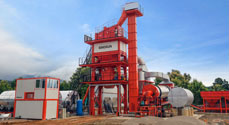
In the field of road construction, bitumen mixing station and waterproof engineering, barrel and ton bag packaging solid bitumen is widely used. bitumen decanter equipment (bitumen melting equipment) is the core special equipment for converting solid bitumen in 200kg steel barrel and ton bag into pumpable liquid bitumen.This article will comprehensively explain the bitumen debarking equipment from the definition of equipment, necessity of application, working principle, complete operation process, core components, comparison of various heating modes and common faults and treatment schemes in field operation, so as to help the equipment purchaser, operation and maintenance personnel of mixing station and engineering management personnel fully understand the equipment.
What Is a Bitumen Decanter?
Bitumen decanter equipment, also known as bitumen melter, bitumening barrel machine, barrel bitumen decanter device, is a professional industrial equipment, specially used to melt solid and semi-solid bitumen contained in steel drums (about 200kg in conventional single drums) and ton bags, and convert solid materials into liquid bitumen with fluidity and pumpability.
bitumen binder is also called bitumen binder in some areas. The viscosity of bitumen material is very high, and its physical properties change greatly under the influence of temperature.Limited by logistics conditions, many remote construction sites and areas with imperfect infrastructure cannot realize bulk transportation of liquid bitumen tankers, and bitumen will be filled in solid form in steel drums or ton bags for transportation and storage.The bitumen decanter equipment is used to melt and precipitate bitumen in the package safely and efficiently, and produce qualified liquid bitumen for bitumen mixing production, road construction, waterproof construction and other related projects.
According to the operation mode, bitumen debarking equipment can be divided into intermittent type and continuous type; according to the processing and packaging type, it can be divided into special debarking equipment for steel drums, bitumen melting equipment for ton bags, and dual-use integrated models for drums and bags; at the same time, there are fixed and mobile versions available for project selection.The processing capacity of the equipment on the market is relatively large, and the hourly output ranges from several tons to more than 15 tons. It can be selected and configured according to the actual bitumen consumption on the site.

Why Do We Need a Bitumen Decanter?
Many people will ask, why not purchase bulk liquid bitumen directly, but also configure additional bitumen de-barrel equipment to melt barrel bitumen?The core reasons come from multiple realistic engineering requirements such as logistics supply, construction safety, production efficiency, material quality control, comprehensive cost, environmental compliance and multi-scenario adaptation.
1. Realistic constraints on logistics supply
Bulk liquid bitumen transportation must rely on special heating tankers, and the construction site also needs a complete set of infrastructure supporting large insulation storage tanks.Many remote mountain construction sites, overseas projects, short-term temporary construction sites, the construction of a complete set of bulk bitumen storage and transfer system investment is high, the economy is very poor.The bitumen packed in steel drums and ton bags can be transported by ordinary trucks, with low storage threshold and more flexible distribution to various construction sites.Bitumen debarking equipment assumes the role of on-site conversion, converting packaged solid bitumen into production-usable liquid bitumen in situ to solve supply problems.
2. Reduce operational risks
In the era when there was no professional barrel removal equipment, construction personnel would melt bitumen in primitive ways such as baking steel barrels with open fire and manual dumping.There are many hidden dangers in this kind of soil operation: high temperature bitumen is easy to cause burns to personnel; open fire is close to bitumen, and there is fire risk; bitumen is heated and volatilized with a large amount of toxic smoke, which directly diffuses in the operation area to endanger workers 'health; at the same time, bitumen leakage and flow are easy to occur, causing secondary accidents.
Modern bitumen debarking equipment adopts closed cavity, indirect heat exchange of heat transfer oil, full automatic temperature control and hydraulic automatic loading and discharging. Operators do not need to directly contact high temperature bitumen and packaging barrels, greatly reducing the contact between personnel and high temperature dangerous medium, and avoiding various safety risks of traditional melting methods from the hardware level.
3. Improve production efficiency
Manual baking and melting of barreled bitumen consumes a lot of manpower, and the melting speed is slow, which completely cannot match the continuous production rhythm of the bitumen mixing station.Modern bitumen decanter equipment, continuous model with an hourly capacity of 4‑15 tons, equipped with automatic loading mechanism, can continuously produce liquid bitumen for mixing stations.Avoid shutdown of mixing station due to insufficient supply of bitumen materials, ensure the progress of highway and municipal road maintenance projects, and reduce the delay loss of construction period.
4. Protect the original performance of bitumen materials
bitumen is a temperature-sensitive material. If it encounters local high temperature and direct fire, oxidation, aging, coking and carbonization will occur, and the adhesion performance of bitumen will decrease greatly.Once the bitumen is used, it will directly cause the deterioration of bitumen mixture quality, and the pavement is easy to crack, loose, water damage and other diseases in the later period.
The bitumen decanter equipment relies on controllable indirect heat exchange, the temperature is uniform and stable, there will be no local overheating phenomenon, all technical indexes of bitumen are completely retained, and the liquid bitumen produced has stable performance, so as to ensure the construction quality of subsequent bitumen mixture and waterproof engineering.
5. Reduce material loss
Traditional manual baking, steel drum inner wall will remain a lot of bitumen, material waste is serious.High material recovery rate of high-quality bitumen debarrel equipment, very little residue in the barrel, reduce bitumen raw material loss.At the same time, the automatic operation reduces the number of field operators, and the closed insulation structure consumes less energy than the earth method combustion.For large-scale highway projects, after long-term operation, the savings in raw materials, manpower and energy will form considerable economic benefits.
6. Meet the requirements of environmental protection and industry specifications
Open fire baking bitumen will produce a large amount of unstructured bitumen smoke, which will violate environmental control requirements.The bitumen barrel removal equipment is a closed cavity, and a flue gas collection system can be selected. With the heat preservation and insulation design of the equipment, the emission of unorganized waste gas can be reduced, and the environmental protection regulations of the construction site can be met to realize clean operation.
7, multi-scene adaptation, a wide range of applications
The bitumen debarrel equipment is suitable for a variety of scenarios: bitumen mixing plants, highway and municipal road construction and maintenance, airport runway construction, large-scale waterproof projects, as well as temporary construction sites and field operation sites with insufficient liquid bitumen supply.Whether it is long-term use of fixed stations or short-term production of mobile projects, it can play a role.

Basic Working Principle of a Bitumen Decanter
The core principle of bitumen debarking equipment is not complicated: for solid and semi-solid bitumen packed in steel drums or ton bags, the solid bitumen is melted into liquid bitumen with pumping conditions by controllable indirect heating, and the liquid bitumen is collected by gravity. After filtration, it is transported to storage tanks or mixing equipment.
The mainstream heat exchange mode in the industry is indirect heat exchange of heat transfer oil coil. The high temperature heat transfer oil circulates inside the closed pipeline, and the heat is transferred to the bitumen through the barrel wall. The flame will not directly contact the bitumen material, which not only ensures safety, but also prevents the bitumen from overheating and aging.
The whole set of operation can be disassembled into five core links: loading, heating and melting, secondary temperature adjustment and tempering, filtration and transportation, and empty barrel discharge.
1. Filling and loading: after the steel drum is opened or the top of the drum is broken, it is inverted, and the ton bag is lifted by lifting tools and sent into the melting chamber; continuous equipment can be loaded with full packaging while discharging empty drums, realizing uninterrupted production.Feeding depends on hydraulic pushing mechanism, crane and tray.
2. Heating and melting: the cavity is filled with heat transfer oil coils, the high temperature heat transfer oil circulates, the heat is transmitted to the packaging, the bitumen is softened and melted by heat, flows downward under the action of gravity, and falls into the lower oil collection tank; the cavity is internally provided with grilles to intercept large impurities such as iron sheets and packaging debris.
3. Secondary heating conditioning: The liquid bitumen collected in the lower sump is heated again to 110‑160℃ to reduce the viscosity to pumping standards.Some equipment is equipped with stirring mechanism to make the bitumen temperature uniform, and at the same time evaporate the moisture brought in by the material to avoid problems in the later pumping.
4. Filtration and transportation: the molten bitumen is filtered through a filter screen, and the high-temperature bitumen pump is transported to an external insulated storage tank or directly supplied to an bitumen mixing station through an insulated jacketed pipeline.
5. Empty container discharge: melted empty steel drums and empty bag residues are pushed out of the cavity for recycling or harmless disposal.The whole process can be run intermittently or continuously.
The whole set of equipment is also inseparable from supporting systems: heat transfer oil heating unit, cavity insulation layer, a complete set of temperature and liquid level detection control system, safety interlocking device.The heat transfer oil furnace heats the heat transfer oil to 200‑240℃ for circulating heat exchange; the high-density insulation layer of the cavity reduces heat loss; various sensors monitor the temperature and liquid level in real time to prevent overheating and dry burning; the closed cavity is equipped with interlocking protection to reduce the risk of fire and smoke overflow.
Step-by-Step Process: How Does a Bitumen Decanter Work?
Continuous steel drum bitumen debarking equipment is the most widely used model in the market. Taking this model as an example, the step-by-step field operation process is fully introduced. The loading mode of ton bag model is different, but the melting, oil collection and transportation logic are basically the same.
Step 1: Steel drum pretreatment and charging
The weight of a single barrel of standard bitumen on the market is about 200kg.Pre-treatment of steel drum shall be carried out in the early stage of operation: open the lid or break the top of the drum to ensure that the melted bitumen can flow out smoothly.After processing is complete, place the drum upside down on a feed tray or feed platform.
The inverted steel barrel is pushed into the upper melting cavity by means of hydraulic oil cylinder and pushing mechanism.Continuous model cavity can store 20‑40 steel drums at the same time, new steel drums continue to feed, empty drums continue to discharge, to achieve uninterrupted production.Some models are equipped with hydraulic turnover mechanism, which can automatically complete steel barrel inversion and reduce manual operation.
the second step: that mel cavity is heated and mel once
A large number of heat transfer oil coils are arranged inside the heat preservation closed melting chamber. The heat transfer oil furnace heats the heat transfer oil to 200 - 240℃ and circulates inside the coils.Heat is transferred to the wall of the steel drum by heat conduction and heat radiation, and there is no open fire directly contacting the drum body.The solid bitumen in the barrel is gradually softened and melted when heated.Some equipment will also add hot air circulation to speed up the melting speed.
Step 3: Gravity gravity filtration primary separation
After the bitumen reaches the softening point, it melts into liquid state and flows out downward from the opening of the inverted steel drum by gravity, passing through the perforated grid and sieve plate at the bottom of the cavity.Grille to stop iron fragments, impurities, liquid bitumen dripping down, collected at the bottom of the oil melting pool.
Step 4: Secondary heating and conditioning treatment of oil collecting tank
The temperature of bitumen collected in the lower oil collection tank does not reach the pumping standard.Heat transfer oil heat exchange coils are also arranged in the oil collection tank to continuously heat the bitumen, maintain the temperature in the range of 110 - 160℃, and reduce the viscosity of bitumen to the requirements of pumping conditions.Many equipment are equipped with stirring paddles to continuously stir bitumen, and the temperature distribution is more uniform. At the same time, the moisture brought in by bitumen is evaporated to avoid the impact and cavitation caused by water vapor during later pump transportation.The equipment temperature control system monitors the oil temperature in real time and strictly eliminates excessive temperature aging of bitumen.
Step 5: Fine filtration and pumping
The liquid bitumen flows through a strainer to remove fine impurities and flaking debris from the drum walls.High temperature dedicated bitumen pumps deliver qualified liquid bitumen through insulated jacketed piping to external insulated storage tanks or directly to bitumen mixing plants.Float level switch will automatically start and stop bitumen pump according to bitumen level in oil sump, realizing automatic transportation.
Step 6: Empty bucket discharge, continuous circulation operation
The continuous drum stripping equipment relies on the thrust of the new steel drum to push the empty steel drum that has been melted and emptied out from the other end of the cavity; the intermittent model relies on the hydraulic mechanism to extract the empty drum.Empty drums are shipped out for recycling or scrap disposal.After that, the whole process of feeding and melting is repeated to continuously produce liquid bitumen.The actual hourly processing capacity will be affected by the equipment model, ambient temperature and bitumen grade, generally 4‑15 tons per hour.
The whole process is equipped with heat transfer oil heating system, insulation layer, PLC electrical control system, hydraulic power station, and dual-purpose transformation modules such as flue gas extraction, automatic slag discharge and bucket bag to meet different project requirements.

Main Components of a Bitumen Decanter
Bitumen debarrel equipment is a set of integrated equipment, multiple subsystems cooperate to complete the whole process of feeding, heating, melting, oil collection, filtration and transportation.The eight main components are as follows:
1. Upper heating melting cavity
The outer layer is steel shell, and the inner part is filled with rock wool and other insulation materials. It is the working space of steel drum or ton bag.Heat conducting oil heat exchange coils are arranged inside the cavity, which is the core heat exchange area for realizing the initial melting of bitumen, and the sealed cavity controls the leakage of bitumen flue gas.
2. Lower bitumen oil collection melting pool
arranged below the melting cavity to receive molten pitch flowing down by gravity.Secondary heating coils are also arranged in the pool body, and most of them are equipped with stirring devices.Function is to store molten bitumen, secondary temperature conditioning, complete dehydration, as bitumen pump incoming buffer bin.
3. Heat transfer oil heating circulation system
It contains heat transfer oil furnace (boiler, integrated or external independent), circulating oil pump, closed-loop pipeline, expansion tank, temperature detection and safety protection components.Heat the heat transfer oil to 200 - 240℃ and transfer it to the melting chamber to complete heat exchange with the oil collection tank coil.In addition to thermal oil solutions, there are also options such as direct burner combustion, hot air, and electric heating.
4. Packaging feeding and hydraulic execution system
Including hydraulic power station, hydraulic cylinder, pushing arm, feeding tray guide rail.Steel drum type is used to push and turn steel drum; ton bag type is equipped with crane and hoist to lift ton bag feeding.Continuous models rely on hydraulic mechanism to complete the feed and empty barrel discharge linkage.
5. bitumen pumping and conveying system
Special bitumen pump for high temperature, suitable for high temperature and high viscosity bitumen medium; equipped with jacketed insulation pipeline and various valves to transport the treated liquid bitumen to storage tank or mixing plant.Pipeline insulation prevents bitumen from cooling and solidifying and blocking.
6. Filter impurity removal system
It contains a grille at the bottom of the cavity and a precision screen filter at the rear.Graded interception of iron chips, packaging residues and other impurities, protection of bitumen pumps, to prevent impurities from entering the mixing system, to ensure the cleanliness of bitumen products.
7, electrical and PLC control system
Modern equipment is mostly equipped with PLC control cabinet, integrated temperature controller, liquid level float switch, pressure sensor, safety interlock, sound and light alarm, automatic shutdown protection.Unified management and control of the heat transfer oil system, hydraulic mechanism, bitumen pump, and mixing mechanism to achieve automated operation, and automatic alarm protection in case of over-temperature, abnormal liquid level, and abnormal pressure.
8. Auxiliary structure and optional configuration
Heavy steel frame, full machine insulation layer, empty bucket discharge port; optional configuration: bitumen flue gas collection and treatment device, automatic slag removal mechanism, bucket bag dual-purpose transformation components, mobile chassis, to meet the needs of special construction sites.
Bitumen Drum Decanter Working Process
bitumen is very sensitive to temperature, and the heating method directly determines bitumen quality, equipment safety, and operation and maintenance costs.The mainstream in the market is divided into four schemes: indirect circulation heating of heat transfer oil, heating by direct-fired burner, compound heating by hot air and flue gas, and electric heating, each of which has advantages and disadvantages. The selection needs to be comprehensively considered in combination with project budget, bitumen quality requirements and site conditions.
1, heat transfer oil circulation heating
Working logic: The heat transfer oil furnace heats the special heat transfer oil to 200‑240℃, and the hot oil is transported to the melting chamber and oil collection tank coil through the closed-loop pipeline to indirectly transfer heat to bitumen.
Advantages: soft and uniform heating, no local overheating, maximum avoidance of bitumen oxidation aging coking; high temperature control accuracy; no open flame contact bitumen, high safety performance; suitable for continuous production of large capacity; one heat transfer oil furnace can also be used for multiple bitumen equipment.
👉Applicable scenarios: bitumen mixing station, high-grade highway projects, high requirements for bitumen mixture quality, the pursuit of long-term stable operation.You can choose an external boiler (the existing boiler in the station is more economical), or you can choose a boiler integrated model.
2. Heating scheme of direct-fired burner
Working logic: diesel or gas burner directly heats the cavity and barrel, relying on flame radiation to conduct heat.
Advantages: Fast heating speed, simple equipment structure, low initial procurement investment; suitable for short-term temporary projects.
👉Applicable scenarios: limited budget, short-term emergency projects, projects with low bitumen quality requirements, not recommended for high-grade roads.
3, hot air flue gas compound heating
Working logic: recover the high temperature flue gas after combustion of the burner, and pass it into the melting cavity for circulating heat exchange; many models are combined with heat transfer oil coils to realize waste heat utilization.
Advantages: recovery of flue gas waste heat, high thermal efficiency, fast melting speed; integrated self-heating models are widely used.
👉Applicable scenarios: integrated debarker equipment, engineering projects that pursue energy efficiency.
4. Electric heating scheme
Working logic: rely on electric heating elements to heat coils or chambers.Large-scale equipment is rarely heated by electricity alone, more as auxiliary heating of storage tanks and standby heat supplement.
Advantages: no combustion on site, zero local exhaust emissions; accurate temperature control; no fuel storage, high safety.
👉Applicable scenarios: small equipment, strict environmental control site, as an auxiliary heat supplement system.
| Comparison Item |
Indirect Heating by Heat�conducting Oil |
Direct�fired Burner Heating |
Hot Air�flue Gas Composite Heating |
Electric Heating |
| Quality of bitumen Material |
Excellent, inhibits aging |
Fair to poor, prone to hot�spot coking |
Good quality with well�designed structure |
Excellent |
| Heating Uniformity |
High |
Poor |
Medium�High |
High |
| Safety Level |
High |
Relatively low |
High |
Very high |
| Initial Investment Cost |
Relatively high |
Low |
Medium�relatively high |
Medium |
| Operating Cost |
Medium, good fuel utilization efficiency |
High long�term operating cost |
Low (waste heat recovery) |
Depends on local electricity price |
| Temperature�rising Speed |
Good |
Fast |
Fast (composite model) |
Medium |
| Optimal Application Scenarios |
Continuous production, projects focusing on bitumen quality |
Short�term temporary projects with limited budget |
Integrated self�heating drum�melting equipment |
Environment�sensitive areas, small�sized equipment, backup supplementary heating |

Common Problems During Bitumen Decanter Operation
During the operation of equipment, most of the faults come from abnormal temperature control, insufficient melting, pipeline pump body blockage, heat transfer oil system problems, hydraulic failure, filter blockage, insulation failure and electrical control system failure.Failure will cause productivity decline, material waste, equipment damage, and even bring potential safety hazards. The following is a summary of high-frequency failures on site:
Fault 1: Insufficient melting
Phenomenon: After the barrel removal, a large amount of bitumen adheres to the inner wall of the empty barrel, and the material recovery rate is low.
Causes: insufficient temperature of heat transfer oil; too short melting time of bitumen in cavity; uneven heat distribution; high viscosity of bitumen brand; incorrect inversion of steel drum and offset of placement position.
Impact: A large amount of bitumen raw materials are wasted, and the project operation cost rises.
Operation and maintenance points: ensure that the steel drum is correctly inverted; ensure the working temperature of the heat transfer oil; ensure that the inside of the steel drum cavity has enough residence and melting time; give priority to the continuous equipment with mature design, so that the bitumen can be almost completely precipitated.
Fault 2. bitumen pump and pipeline cold blockage
Phenomenon: bitumen pump cannot start, motor overload trips, coupling is damaged, pipeline has no bitumen output.More often than not, after shutdown and restart.
Cause: pump body, valve and pipeline are not fully insulated and preheated after shutdown, bitumen is cooled and solidified; operating temperature is set too low; filter is blocked; impurities enter pump cavity.
Impact: production interruption, serious motor burn, damage pump body.
Operation and maintenance points: the pump and pipeline must be preheated in advance before the equipment is restarted, and the shell temperature is recommended to be greater than 80℃; the low temperature interlock protection function is enabled; the filter is cleaned regularly; the pipeline purging maintenance is carried out during shutdown.
Fault 3. Degradation, coking and leakage of heat transfer oil system
Phenomenon: melting efficiency decreases, melting time becomes longer, fuel consumption increases; bitumen is contaminated by heat transfer oil.
Cause: long-term over-temperature operation of heat transfer oil, carbon deposition on the inner wall of coil pipe, thin layer of carbon deposition will greatly reduce heat transfer efficiency; long-term use of heat transfer oil cracking deterioration; pipeline, coil joint leakage.
Impact: energy consumption soaring, melting capacity decline, there is a risk of medium cross-contamination.
Operation and maintenance points: regularly test the acid value and residual carbon index of heat transfer oil every six months, and replace them in time if the index exceeds the standard; strictly control the working temperature of heat transfer oil; regularly inspect the leakage points of pipelines.
Fault 4. Hydraulic system fault
Phenomenon: hydraulic system pressure is insufficient, oil cylinder thrust is not enough, steel drum can not feed and discharge, equipment stuck.
Causes: hydraulic pump damage, overflow valve failure; hydraulic oil temperature is too high; hydraulic oil level is insufficient, filter plug; limit switch failure.
Impact: Continuous production interruption, manual intervention is required to handle stuck barrels, increasing operation risks.
Operation and maintenance points: daily check hydraulic oil level and oil quality, regularly replace filter elements; check valves and limit switches, and include them in daily inspection.
Fault 5, abnormal temperature control
Phenomenon: bitumen temperature fluctuates between high and low, temperature exceeds standard, or temperature does not go up, bitumen viscosity is too large.
Causes: temperature sensor failure drift; equipment insulation damage; temperature control parameter setting error; direct combustion type uneven heating.
Impact: bitumen overtemperature will oxidize and age coking; too low temperature will cause insufficient fluidity, difficult transportation, and bring fire risk.
Key points of operation and maintenance: calibrate temperature sensor regularly; repair damaged insulation; set temperature strictly according to bitumen grade, and prohibit overheating.Preference is given to indirect heating with heat transfer oil, which has stronger temperature control stability.
Fault 6. Filter and grille are blocked
Phenomenon: pipeline flow becomes smaller, bitumen pump load is large, impurities follow bitumen into downstream storage tank mixing plant.
Cause: steel drum scrap, impurities, solidified bitumen accumulation in the grid, filter screen.
Impact: equipment capacity drops, impurities pollute downstream equipment, affect mixture quality.
Key points of operation and maintenance: clean the filter screen and cavity grille according to the cycle; minimize iron chips falling into the cavity during the pretreatment stage of steel drum.
Fault 7, insulation damage, a lot of heat loss
Phenomenon: abnormal increase in fuel consumption, slow melting, local high temperature of equipment shell.
Cause: rock wool insulation layer broken off; cavity door sealing failure; outdoor equipment affected by strong wind cooling.
Impact: Energy consumption increases, and the overall melting efficiency of the equipment decreases.
Key points of operation and maintenance: regularly check the insulation layer, repair the damage in time; provide windproof protection for the equipment when the open space conditions permit.
epilogue

send me your inqiry about the bitumen meilting machine
As the core equipment for converting solid bitumen into liquid bitumen, bitumen decanter equipment solves the problem of bitumen supply in logistics restricted areas.When selecting equipment, we should not only look at the purchase price, but also reasonably select the heating scheme in combination with the project output, bitumen quality requirements and on-site power supply fuel conditions.After the equipment is put into use, daily inspection and maintenance of heat transfer oil, hydraulic pressure, filtration and temperature control systems shall be carried out to ensure stable and continuous production of qualified liquid bitumen, prolong the service life of the whole machine and reduce the comprehensive operation and maintenance cost of the project.