HOME > Press&Media > Events >
what is bitumen emulsion plant


1. what is bitumen emulsification plant

bitumen emulsification plant is a set of professional complete industrial system, divided into fixed, mobile, container modular three forms, dedicated to the production of emulsified bitumen.Emulsified bitumen is a stable liquid mixture of bitumen, water, emulsifier, acid, stabilizer and other additives.
In terms of material characteristics, bitumen belongs to oil phase, oil and water are naturally insoluble, and ordinary stirring cannot achieve uniform mixing of the two.bitumen emulsification equipment relies on precise metering, material heating and temperature control, and then provides high-intensity mechanical shear force through colloid mill to break high-temperature bitumen into 1‑10 microns or even finer particles, which are uniformly dispersed and suspended in aqueous solution.Emulsifier molecules wrap on the surface of bitumen droplets to prevent bitumen particles from aggregating and fusing with each other. The final emulsified bitumen can maintain liquid state at normal temperature and has good workability.
According to the charged properties of droplets, emulsified bitumen is mainly divided into cationic emulsified bitumen, anionic emulsified bitumen, and rarely used nonionic products.Cationic emulsified bitumen droplets are positively charged and have excellent adhesion properties with most aggregates, which is the mainstream product of domestic road engineering; anionic emulsified bitumen droplets are negatively charged and are mostly used for specific waterproof projects and specific aggregate conditions.In addition, the products are also divided into fast cracking, medium cracking and slow cracking grades according to the demulsification speed, corresponding to different construction process requirements.

2.bitumen emulsification equipment complete production process

The bitumen emulsification equipment produces emulsified bitumen, which is divided into five core processes as a whole. Most of the whole process is automatically completed by PLC programmable control system, which can not only produce intermittent batches, but also continuously produce finished emulsified bitumen. The temperature, flow rate and ratio of each step will directly determine the storage stability, particle fineness and road performance of emulsified bitumen.

bitumen pretreatment heating procedure

The base bitumen is transported into the bitumen storage tank with heating and stirring function, and the heating temperature is controlled at 130‑160℃, and some special bitumen grades will be raised to 180℃.High temperature can greatly reduce the viscosity of bitumen, ensure that bitumen can be pumped smoothly, and meet the shear grinding conditions of colloid mill.The internal stirring device of the tank runs continuously to avoid excessive local temperature of bitumen and precipitation stratification, and ensure uniform and consistent feed bitumen materials.bitumen temperature control is very critical. If the temperature is too low, the bitumen fluidity is poor, the particles sheared out are coarse, and the emulsion is easy to delaminate and demulsify; if the temperature is too high, the bitumen aging will be caused, which will directly damage the final pavement performance.
Soap preparation process
The aqueous phase preparation is completed in a separate preparation tank. First, the process water is heated to 40‑70℃, and the common working temperature in the industry is about 50℃.Subsequently, emulsifier is accurately added according to the formula; hydrochloric acid is needed to adjust the pH value of the system when cationic emulsified bitumen is produced; stabilizers such as calcium chloride can also be added as needed to improve the storage stability of emulsion.After all materials are put into the tank, they are fully stirred and mixed to prepare soap solution, that is, aqueous phase system of emulsion production.The pH, temperature and emulsifier concentration of soap solution directly determine whether bitumen particles can be fully encapsulated, which is the key step to ensure the stability of emulsion.

Accurate metering, conveying and feeding process

The heated hot pitch and the prepared qualified soap solution are synchronously transported to the inside of the colloid mill according to a preset proportion through a pump group and a flowmeter.The equipment relies on flow meters, variable frequency pumps and PID closed-loop control to adjust the flow of both in real time, and strictly controls the bitumen solid content to maintain the target interval of 40‑70%.The automatic system collects flow data in real time, and automatically alarms and adjusts once there is deviation in the ratio, so as to avoid the finished product rejection caused by the imbalance of oil-water ratio.

Colloid mill emulsification shearing (core process)

Two-phase materials enter the high-shear multistage colloid mill, relying on the rotor-stator high-speed relative motion output strong mechanical shear force, the bulk bitumen is torn into micron-sized fine particles, and the industry quality equipment can achieve more than 85% particle size ≤5 microns.bitumen particles were rapidly encapsulated by emulsifier molecules in soap solution, forming oil-in-water stable emulsion system.The discharge temperature of materials from colloid mill is generally maintained at 85‑95℃, which is the core of the whole set of production. The grinding gap and shear strength of colloid mill directly determine the fineness and storage stability of finished particles.
5. Cooling, storage and quality inspection
The newly produced high temperature emulsified bitumen can be transferred into the finished product storage tank after heat exchange and cooling through heat exchanger to reduce the temperature of the material.Quality inspection must be carried out after production, including particle size distribution, viscosity, bitumen solid content, pH value and storage stability.Qualified finished products are stored in storage tanks for transportation and loading.
Intermittent equipment is suitable for small batch and frequent switching formula production; continuous online equipment has higher automation and larger production capacity, suitable for large-scale stable supply projects.

3. Main core components of bitumen emulsification equipment

A complete set of bitumen emulsification equipment, by seven systems to work together, of which colloid mill, precision metering system, automatic control system is to determine the quality of the three key components, parts material selection will also affect the life of the equipment, cationic emulsion bitumen production environment with acidic corrosion, contact material parts preferably stainless steel.

bitumen supply system

It contains thermal insulation heating bitumen storage tank and bitumen conveying pump.The bitumen storage tank is equipped with heat transfer oil/electric heating system and stirring mechanism to ensure that the bitumen maintains the working temperature of 130‑160℃, and the tank body is insulated to reduce heat loss; the delivery pump selects a special volumetric hot bitumen pump to stably and controllably deliver high temperature bitumen to the colloid mill to ensure stable feed flow.bitumen pipelines are generally equipped with heat tracing and insulation to prevent bitumen cooling and solidification inside the pipeline from blocking the pipeline.

Soap aqueous phase preparation system

Soap preparation tank with heating and stirring function, used to complete the mixing of water, emulsifier, acid, stabilizer; matching acid, emulsifier dedicated metering unit, relying on weighing or flow metering to achieve accurate addition of additives; soap delivery pump, the preparation of soap delivery to the colloid mill.For cationic emulsion production, tanks and pipelines shall be made of corrosion-resistant stainless steel to resist corrosion in acidic medium.

Emulsion grinding unit (core component)

High shear multistage colloid mill, heart part of complete equipment.By means of rotor stator high speed shear grinding, hot pitch is crushed into micron fine particles and dispersed evenly into water phase.The gap of colloid mill disc can be adjusted. The material of disc is wear-resistant and corrosion-resistant. The wear of disc will directly cause particle coarsening and emulsion stability reduction, which requires regular maintenance.

Measurement and automatic control system

bitumen, soap two-way high-precision flowmeter, real-time collection of material flow;PLC automatic control system, built-in multiple sets of production formula, the operator can directly call the formula, real-time monitoring of temperature, pressure, flow, ratio, PID closed-loop automatic adjustment of pump speed; matching variable frequency drive pump group, according to the flow feedback real-time adjustment of the transmission speed, to ensure long-term stability of oil-water ratio.The higher the degree of automation, the less human error, the better the consistency of finished product quality.

the whole machine heating system

Heat transfer oil boiler, electric heater or burner to provide heat source for bitumen tank, soap tank and tracing pipeline.Heat transfer oil heating heat exchange is uniform, temperature control is stable, large and medium-sized equipment is preferably heated by heat transfer oil; small equipment often adopts electric heating scheme.

Finished emulsified bitumen receiving and storage system

The finished product storage tank receives the 85 - 95℃ high temperature emulsified bitumen output from the colloid mill; an optional heat exchanger can be used to control the cooling of the hot emulsion to improve the stability of the finished product and reduce the storage safety risk.Storage tanks are generally equipped with stirring devices to prevent sedimentation and stratification of emulsified bitumen.

Supporting auxiliary components

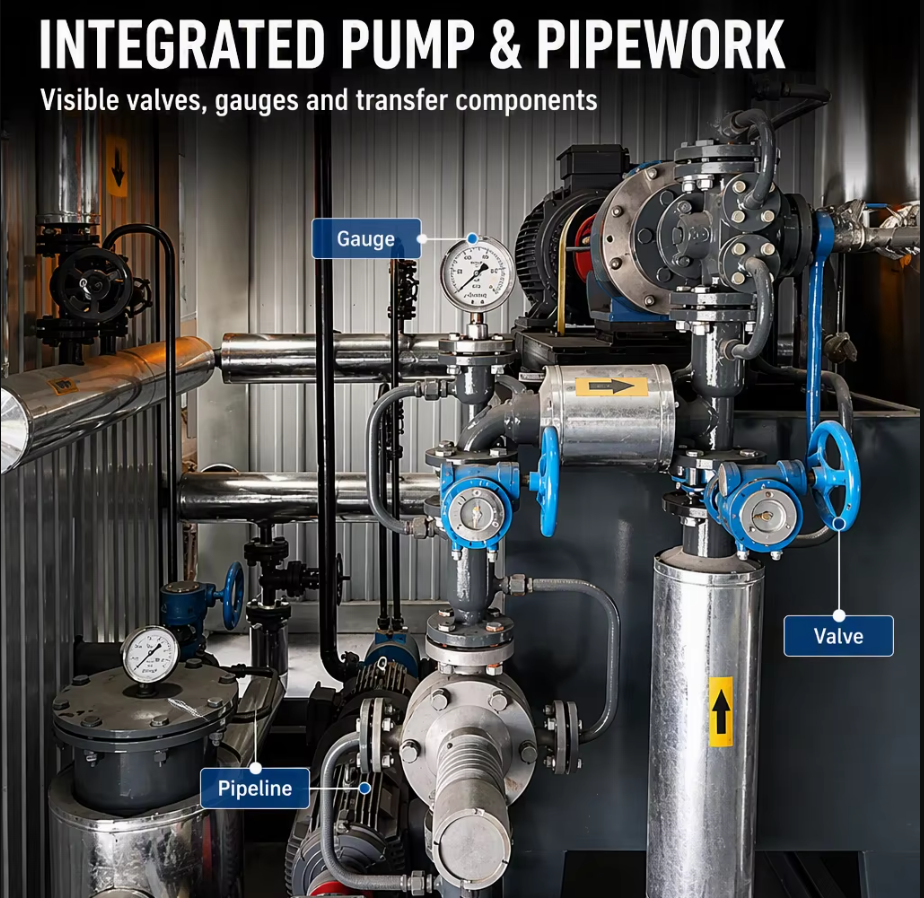
Including a complete set of process valves and pipes, filters, various sensors of temperature, pressure and liquid level, safety interlock protection device; some models can be optionally equipped with polymer modification additive injection system for producing modified emulsified bitumen.
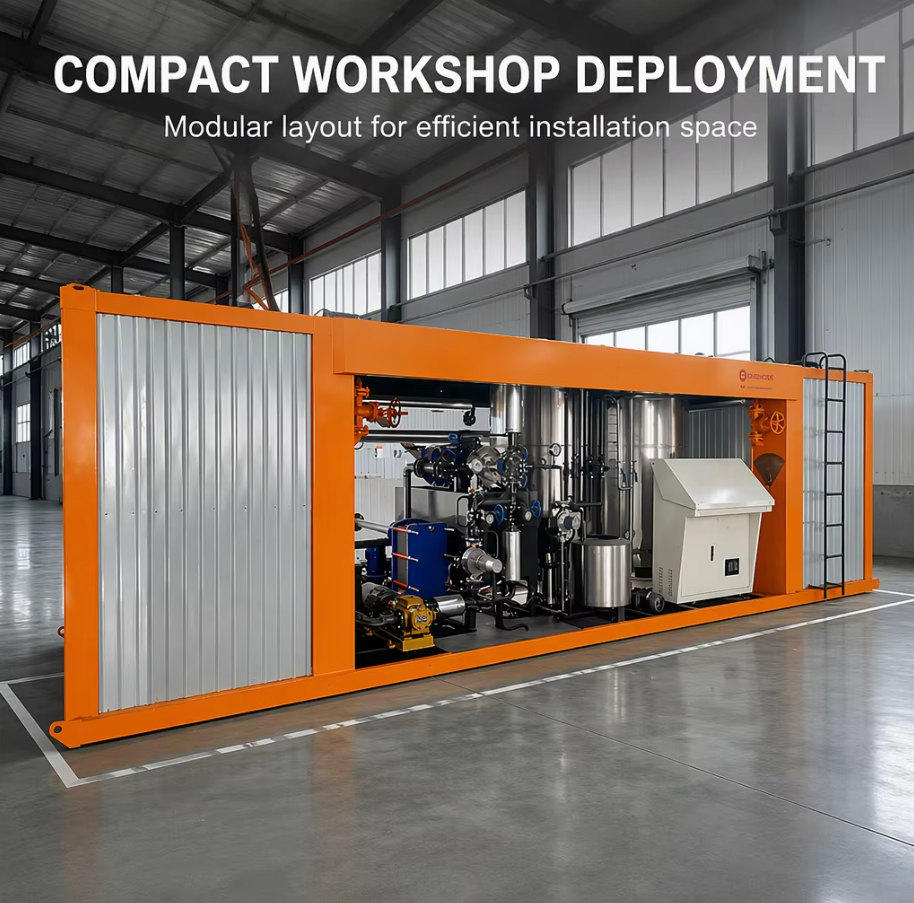
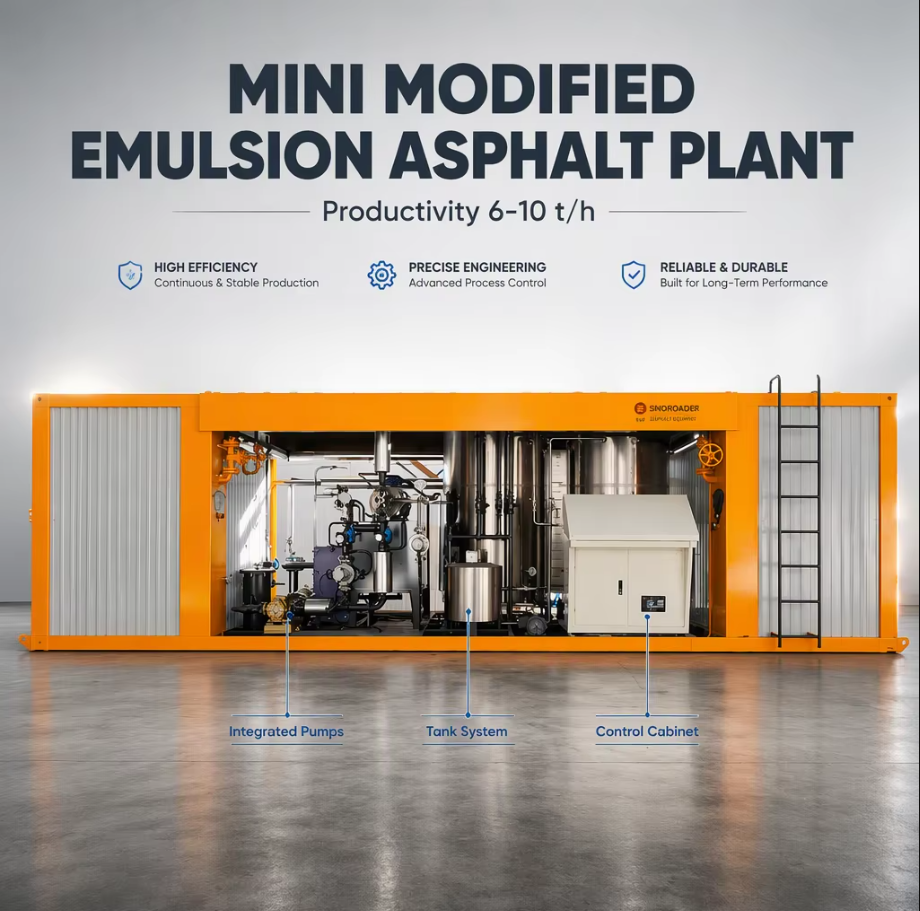
The equipment structure is divided into intermittent batch type and continuous online type; the installation form is divided into fixed type, mobile skid-mounted and container integrated equipment to meet the different needs of site relocation and fixed plant area.

4. What are the different types of emulsified bitumen

Emulsified bitumen mainly has two classification dimensions: bitumen droplet charge type, demulsification solidification speed, in addition to viscosity, residual bitumen hardness, polymer modification and other indicators, further subdivided into different product brands, adapted to different construction scenarios.

Classification according to droplet charge

1) Cationic emulsified bitumen: droplets with positive charge, mainstream products of domestic road engineering, and excellent bonding effect of most mineral aggregates, brand identification with C prefix, such as CRS‑2, CMS‑2, CSS‑1h.Cationic emulsified bitumen can be constructed under humid conditions on the aggregate surface and has strong adaptability to low temperature and high humidity environments.
2) Anionic emulsified bitumen: droplets with negative charges, mostly used in limestone aggregate conditions, waterproofing and other special industrial scenarios, the proportion of road use is decreasing, the brand does not carry C prefix, such as RS‑2, SS‑1h.
3) Non-ionic emulsified bitumen: very few use scenarios, only used for special niche conditions.
Important precautions: Cationic emulsified bitumen and anionic emulsified bitumen must not be mixed, once mixed, rapid coagulation and demulsification will occur immediately, resulting in material scrapping. When the equipment is switched to production type, all tank pipelines must be thoroughly cleaned.

Classified according to demulsification (coagulation) speed

The demulsification speed represents the speed at which bitumen particles are agglomerated and formed after the emulsified bitumen contacts the aggregate and loses moisture, and directly matches the construction process:
1) Fast-cracking RS: Demulsification speed is extremely fast, suitable for surface seal layer, crushed stone seal layer and viscous layer oil spraying construction; representative grades CRS‑1 and CRS‑2.
2) Medium crack type MS: medium demulsification time, suitable for cold mixing mixture, pit repair, ready-mixed slurry mixture; representative grades CMS‑2, CMS‑ 2h.
3) Slow cracking SS: slow demulsification speed, high emulsion storage stability, suitable for slurry seal, micro-surface, soil stability, fog seal; representative grades CSS‑1, CSS‑1h.
4) Quick middle crack QS: between fast crack and middle crack, used for special slurry, micro-surface special system.

5. Main application fields of emulsified bitumen

Emulsified bitumen has the biggest advantage of normal temperature construction, which is safer and more energy-saving than hot bitumen. It is widely used in highway construction, preventive maintenance and old road regeneration. At the same time, it is extended to waterproof, soil solidification and other engineering fields. It is one of the most important materials for road maintenance in China.
Road construction and maintenance core scenario
1. Viscous layer oil: sprayed between bitumen layer and bitumen layer, quick-cracking/medium-cracking cationic emulsified bitumen is generally selected to strengthen interlayer adhesion and prevent interlayer slip of pavement. It is an essential process for high-grade highways.
2. Permeable oil: spray on the surface of semi-rigid base course, select slow-cracking emulsified bitumen, penetrate into the gap of base course, consolidate loose particles, realize waterproof, and improve the bonding ability of base course and upper bitumen mixture.
3. Macadam sealing layer (surface treatment): after spraying emulsified bitumen, spread macadam aggregate, adopt fast-cracking products, seal the surface layer of pavement, restore the anti-skid performance of pavement, block rainwater infiltration, and prolong the life of pavement.
4. Slurry seal: Emulsified bitumen is mixed with fine aggregate and filler and spread in a thin layer. Slow-cracking emulsified bitumen is used to seal fine cracks and improve the appearance of the road. It is a low-cost preventive maintenance method.
5, micro-surface: polymer modified slow cracking emulsified bitumen, mixture paving thickness is greater than ordinary slurry seal layer, can repair road rutting, greatly improve road anti-skid, heavy load road maintenance preferred process.
6. Fog sealing layer: thin layer of diluted emulsified bitumen sprayed to restore the performance of aged bitumen, block micro cracks and reduce loose and peeling of pavement aggregate.
7. Cold-mixed bitumen mixture: mixing aggregate and emulsified bitumen at normal temperature, used for pit repair, low-grade road paving, mixture can be stored for a short time, and repair work can also be carried out in low temperature environment.
8. In-situ/plant cold recycling: use old pavement milling waste, add emulsified bitumen as binder, realize recycling of old pavement materials, save stone resources and reduce project cost.
9. Soil stabilization treatment: slow-cracking emulsified bitumen is mixed with soil and aggregate to improve subgrade strength. It is used for rural roads and temporary access roads to suppress dust.

6. What are the core advantages of self-built bitumen emulsification equipment

For engineering companies, maintenance work areas and building materials production enterprises, self-built bitumen emulsification equipment has outstanding advantages in cost, environmental protection safety and production flexibility compared with directly purchased finished emulsified bitumen. Fixed, mobile and containerized equipment can enjoy the following benefits.

 Directly reduce the comprehensive procurement cost

Purchased finished emulsified bitumen contains a lot of water, which is equivalent to paying for transportation of a large amount of water, and the logistics cost accounts for a high proportion.Self-built equipment directly purchases matrix bitumen, local water source, and a small amount of emulsifier additives for on-site production. Compared with purchased finished products, the comprehensive material cost can be saved by 20‑30%.In the production process, only the matrix bitumen needs to be heated to 130‑160℃, and the finished product can be used at normal temperature, so the overall energy consumption is lower; especially for remote engineering projects, long-distance transportation is omitted, and the effect of logistics cost reduction is particularly obvious.For most engineering users, equipment investment can be recovered in 6 - 18 months by cost savings.

Energy saving and environmental protection, responding to low carbon construction requirements

Compared with the traditional hot mix bitumen process, the overall energy consumption can be reduced by up to 50%, and the greenhouse gas and volatile smoke emissions are significantly reduced.Support cold regeneration and other recycling processes, reduce the consumption of new stone mining; the whole process uses water as the medium, does not use organic solvents, more environmentally friendly.
Improve site operation safety
The finished emulsified bitumen is used at normal temperature, and a large amount of high-temperature hot bitumen is no longer required to be stored and transported on the construction site, which greatly reduces the risk of high temperature scald, bitumen smoke and fire, and improves the working conditions of front-line construction personnel.

flexible production, independent control of product quality

The equipment can produce cation, anion, fast crack, medium crack, slow crack, modified emulsified bitumen and other products according to the demand by PLC switching formula.Produce and use it now, avoiding the problems of delamination and demulsification failure of purchased finished products after long-distance transportation and long-term storage.It can accurately control the bitumen solid content, particle fineness and additive addition amount, and the performance of each batch of products is stable and controllable; continuous equipment can also quickly switch different formulas to adapt to different project technical indicators.

the use of engineering construction level advantages

Emulsified bitumen can be constructed at normal temperature, can handle wet base surface, and can also be operated in low temperature environment, effectively lengthening the construction window period.Mobile and containerized equipment can be deployed directly to the project site, used nearby for production, and optimized for the rhythm of project material supply.Adapts to almost all maintenance processes from daily minor repair to large-scale cold in-place regeneration.

the material itself performance advantages

Cationic emulsified bitumen and most aggregates have strong adhesive force; good fluidity and strong wetting ability; finished products can also be diluted with water, used for permeable layer, dust suppression and other scenes; compatible with cement, lime and latex modifiers.

7.how to correctly select bitumen emulsification equipment

Selection requires comprehensive evaluation of capacity demand, planned production emulsion bitumen type, use site, mobile demand, budget, and later operation and maintenance conditions. It is easy to mismatch equipment and working conditions only by looking at the purchase price, resulting in poor production quality and high failure rate in the later period.Here are the complete selection steps.

 Determine actual capacity requirements

Statistics project peak, average daily output, conversion hourly capacity.Common market specifications: 4‑10 tons per hour, suitable for small and medium-sized maintenance units, small projects;15‑40 tons per hour, suitable for large-scale projects, commercial external supply.Selection should not blindly pursue super-capacity, match the normal demand, avoid idle equipment to raise investment; at the same time reserve future business growth space.

Determine the equipment process and structure form

Equipment Type Applicable Scenarios Advantages Disadvantages
Batch Type Low output volume, frequent formula changes Low initial investment, controllable quality Limited continuous output capacity, long batch changeover preparation time
Continuous In-line Type Large-volume stable production High output efficiency, fast formula changeover, low labor requirement High equipment complexity, higher procurement cost
Skid-mounted / Containerized Mobile Type Multi-site rotation, remote field projects Fast transportation and installation, flexible deployment Slightly lower maximum capacity for equivalent configuration
Fixed Type Long-term production in fixed plant High capacity ceiling, complete configuration Cannot be relocated, requires civil engineering foundation


Clarify the list of emulsified bitumen products to be produced
Clarify whether cation or anion is mainly produced, fast crack, medium crack and slow crack, and whether modified emulsified bitumen is needed.The equipment must support accurate dosing of corresponding auxiliaries (acid, latex, stabilizer).Colloid mill shear performance to meet the particle fineness, ideal state 85% particles ≤5 microns, to ensure emulsion storage stability.

Focus on evaluating the configuration of core components

1) Colloidal mill: the heart of the whole machine, priority multi-stage high shear model, adjustable disc gap; production of cationic emulsified bitumen must have corrosion resistant materials, disc wear resistance is good.
2) Metering system: high-quality flowmeter, variable frequency pump, PID closed-loop control to ensure accurate oil-water ratio.
3) Heating system: large and medium-sized equipment priority heat transfer oil heating; small equipment optional electric heating.
4) Tank material: soap solution, acid-adding tank pipeline, priority stainless steel material to resist corrosion; bitumen tank heat preservation.
5) Automation: It is strongly recommended to bring PLC control system, formula storage, real-time monitoring, alarm, production data recording, and reduce human error.

Field condition assessment

Site conditions: whether the equipment needs to be moved frequently, decide whether to choose mobile skid-mounted or fixed station; site size, power supply, water supply quality, drainage conditions; local climate, cold areas should consider anti-freezing evacuation design.The equipment should be easy to clean and maintain. The emulsified bitumen is viscous, cationic products are corrosive, and maintainability is directly related to the life of the equipment. Safety configuration: pressure and temperature interlock, emergency shutdown, and safe disposal of chemicals.

evaluate the strength of manufacturers and after-sales service

Give priority to manufacturers with mature cases in the field of road construction machinery; confirm spare parts supply, on-site commissioning, personnel training and after-sales technical support; equipment conforms to relevant industry standards; try to obtain feedback from users of the same type of equipment; confirm equipment factory commissioning, installation guidance and warranty terms
Simple checklist for selection
1) How many tons of emulsified bitumen need to be produced per hour;
2) Whether the equipment needs to be frequently transferred to the construction site;
3) What kinds of emulsified bitumen brands are mainly produced, and whether modified emulsified bitumen is produced;
4) Manual or automatic PLC control is required;
5) Budget and expected investment recovery cycle;
6) Whether there are spare parts and after-sales technical support locally.

8. Installation of bitumen emulsification equipment

Standardized installation and debugging and regular maintenance are necessary conditions to ensure stable operation of equipment, meet the quality standards of emulsified bitumen, extend equipment life, and avoid safety accidents.Many emulsion quality instability, equipment failure, root cause from the installation is not in place or lack of routine maintenance.

equipment installation points

site preparation
The ground of the site is flat and the drainage is smooth, and 500‑1500㎡ space is reserved according to the size of the equipment; the space for bitumen tanker and finished product transportation vehicles is reserved; the fixed equipment needs concrete foundation; the civil work of skid-mounted container equipment is small.Power supply, process water and compressed air meeting power requirements shall be provided; sewage and waste liquid collection shall be well done; fire prevention and leakage prevention cofferdams shall be implemented to meet local environmental protection and safety regulations.
Equipment installation steps
1, according to the manufacturer's drawings in place host skid body, control cabinet, pump group;
2. Install bitumen storage tank, soap tank and finished product storage tank;
3. Connect process pipeline, bitumen pipeline, heat tracing and insulation, and match valve sensor;
4. Install heat transfer oil heating system or electric heating device;
5, electrical wiring, grounding, complete PLC control system wiring;
6. Safety system in place: temperature and pressure interlock, emergency stop switch and ventilation facilities;
7. All flow meters, temperature sensors and metering units are calibrated.
Most container skidding equipment is pre-assembled in the factory, and the pipeline and electrical connection can be completed on site. The installation and debugging cycle is short.

9. bitumen emulsification equipment and modified bitumen equipment core difference

bitumen emulsification equipment and modified bitumen (PMB) equipment are often confused in the engineering field. Both sets of equipment deal with bitumen, but the production products, process principles, core components and use scenarios are completely different and cannot be replaced with each other. Of course, there are also composite equipment that can realize the production of modified emulsified bitumen.
Core Comparison Overview

Comparison Dimension Asphalt Emulsion Equipment Modified Asphalt Equipment (PMB Equipment)
Core Purpose Produce emulsified asphalt (asphalt dispersed in water) Produce polymer-modified asphalt (PMB)
Finished Product Water-based emulsion, liquid at room temperature, pumpable High-temperature viscous modified asphalt, water-free, must be stored under insulation
Core Process Colloid mill high-shear: breaks asphalt into fine particles and disperses into soap solution Under high temperature, fully shears and swells polymers such as SBS/EVA into asphalt
Core Equipment Colloid mill, soap solution blending tank, precise water-phase metering system High-shear grinder, modifier dosing system, maturation/development tank
Main Raw Materials Base asphalt + water + emulsifier + acid / stabilizer Base asphalt + modifiers such as SBS/EVA / rubber powder
Operating Temperature Asphalt heated to 130–160°C; discharge at 85–95°C Higher overall temperature, operating at 160–200°C or above
Application Conditions Cold application at room or low temperature Must be hot-mixed and hot-laid at high temperature
Energy Consumption Finished product requires no insulation, overall low energy consumption Finished product requires high-temperature insulation throughout, high energy consumption
Typical Capacity 4–40 tons/hour Various specifications, mostly large-scale continuous production lines


The nature of products is different

bitumen emulsification equipment produces emulsified bitumen: bitumen fine particles suspended in water, normal temperature is liquid; modified bitumen equipment produces polymer modified bitumen, no water phase, only bitumen and polymer, normal temperature viscous hard, must continue to heat high temperature to flow.

Differences in production process

Emulsification equipment relies on colloid mill to shear and disperse bitumen in aqueous solution system; modified bitumen equipment shear and disperse polymer particles under high temperature pure bitumen system, and after shearing, it needs to enter curing tank to fully swell and develop polymer, so as to obtain qualified modified bitumen.

Different emphases of equipment

Emulsification equipment focuses on accurate measurement of aqueous phase agents, corrosion prevention structure, particle fineness of colloid mill; modified bitumen equipment focuses on solid modifier dosing, high temperature resistance, aging storage tank.

engineering application difference

Emulsified bitumen is mainly used for preventive maintenance: sticky layer, gravel seal layer, slurry seal layer, micro-surface, cold regeneration, pit repair; modified bitumen is used for high-grade road hot-mix bitumen mixture, used for pavement structure layer, to improve pavement rutting resistance and cracking resistance.

 
Under the background of continuous expansion of domestic highway maintenance scale, rapid promotion of cold mixing and cold paving and low carbon technology for old pavement regeneration, bitumen emulsification equipment has become an important equipment for road engineering.Fully understand the equipment principle, production process, product classification, selection logic, installation and normal maintenance, can stably produce high-quality emulsified bitumen, reduce project costs, and give full play to the economic and environmental protection value of cold construction technology.

Pre:first page Next:Philbex 2013

Office

  • Philippines:17F High Street South Corporate Plaza Tower 2, 26thStreet cor. 11th Ave, BGC, Taguig

    TEL: +63 908 868 1506

    Email: eagloballbuilders@gmail.com

  • Singapore:60 Paya Lebar Road, #12-03, Paya Lebar Square, Singapore 409051

  • Thailand: 948/22 Rama 2 Rd, Mahachai Samutsakon 74000

    TEL: +0642 85 2984 Mr. Chirapat

  • Iran: Tehran, Vanak, Sheikh Bahaei square, Sadaf Tower, No.47

Contact Us

  • Linkedin
  • Facebook
  • Twitter
  • YouTube
Copyright © Zhengzhou SINOSUN Machinery CO.,LTDPrivacy Policy