HOME > Press&Media > Events >
What Is a Bitumen Decanter? Complete Guide


Bitumen is an indispensable core raw material in highway construction, municipal engineering, building waterproofing and other fields.Limited by storage, long-distance transportation, especially overseas import and remote site logistics conditions, a large amount of bitumen will arrive at the construction site in solid form of 200kg metal iron drums and 1 ton bags.Solid barreled and bagged bitumen cannot be directly put into mixing equipment for use. The traditional operation mode of open fire baking and manual cutting and dumping has many pain points such as high safety hazard, high bitumen loss, high labor intensity and easy aging and deterioration of bitumen.bitumen decanter equipment (also known as bitumen melting machine, decanter machine, debagging machine) is a special industrial equipment specially designed to safely and efficiently melt barreled/bagged solid bitumen into liquid bitumen. It is widely equipped with bitumen mixing stations to provide stable and qualified liquid bitumen raw materials for road construction.

1.what Is a Bitumen Decanter?

The bitumen decanter equipment is a professional industrial melting equipment developed for barrel, ton bag solid/semisolid bitumen. Its core function is to heat and melt solid bitumen packaged in iron drums or ton bags, and to separate bitumen from packaging by gravity. It produces high temperature liquid bitumen meeting pumping conditions and supplies it to bitumen mixing station, waterproof production line and other downstream equipment.
bitumen viscosity is very high at normal temperature, most of them are hard solid, so import and export trade, remote projects often use iron drums, ton bags packaging transportation.If artificial open fire heating is relied on, not only the operation efficiency is low, but also scalding and fire are easy to occur. At the same time, 2‑5% or more bitumen raw materials will remain on the barrel wall, resulting in material waste; direct burning with open fire will also cause local overheating, damaging the physical and chemical indicators of bitumen, directly affecting the finished product quality of bitumen mixture and waterproof coil.
The mainstream of modern bitumen decanter equipment adopts indirect heating process of heat transfer oil, flame will not directly contact bitumen materials, while ensuring melting speed, maximizing the protection of bitumen performance, reducing the risk of volatile smoke leakage, realizing automatic and closed operation, replacing backward manual treatment methods, and is the key equipment for bitumen construction projects.

2.Why Is a Bitumen Decanter Needed?

Many construction units will wonder: Is it necessary to purchase special debarkling equipment for barreled bitumen?Compared with the pain points of traditional treatment processes, we can see the actual value of bitumen decanter equipment.
Five problems existing in traditional manual treatment of barrel bitumen
High manpower consumption and poor production continuity
Manual baking of iron barrels and cutting of ton bags belong to heavy manual operation, and the melting cycle of single barrel is long. When asphalt mixing plant is continuously produced, the manual processing speed cannot keep up with the consumption speed of mixing plant, which frequently causes the mixing plant to stop waiting for materials, resulting in high shutdown loss.
safety risks are prominent
High-temperature bitumen is easy to cause scalding; bitumen is heated directly by open fire, and oil and gas volatilized from bitumen may cause fire and explosion hazards in case of open fire; site operators are exposed to bitumen smoke for a long time, with high occupational health risks; heavy high-temperature bitumen barrels are easy to bump and spill accidents when transported.

3. High material loss and poor bitumen quality

Under manual treatment conditions, a large amount of bitumen residue will adhere to the inner wall of the barrel, and the material loss can reach 2‑5%; the local high temperature of open fire will accelerate the aging of bitumen, and the key indicators such as penetration and ductility will be attenuated, which will directly reduce the performance of pavement mixture.

4. High energy consumption, environmental protection is not up to standard

Open heating heat loss, fuel consumption remains high; bitumen volatile flue gas emissions without organization, can not meet the environmental inspection requirements, many construction sites were ordered to stop work rectification.

5. Material supply constraints for remote projects

In many mountainous areas and overseas aid projects, liquid bitumen tankers cannot arrive, so they can only rely on barrels and tons of bitumen supply. bitumen construction cannot be carried out without decanterling equipment.
How to solve the above pain points
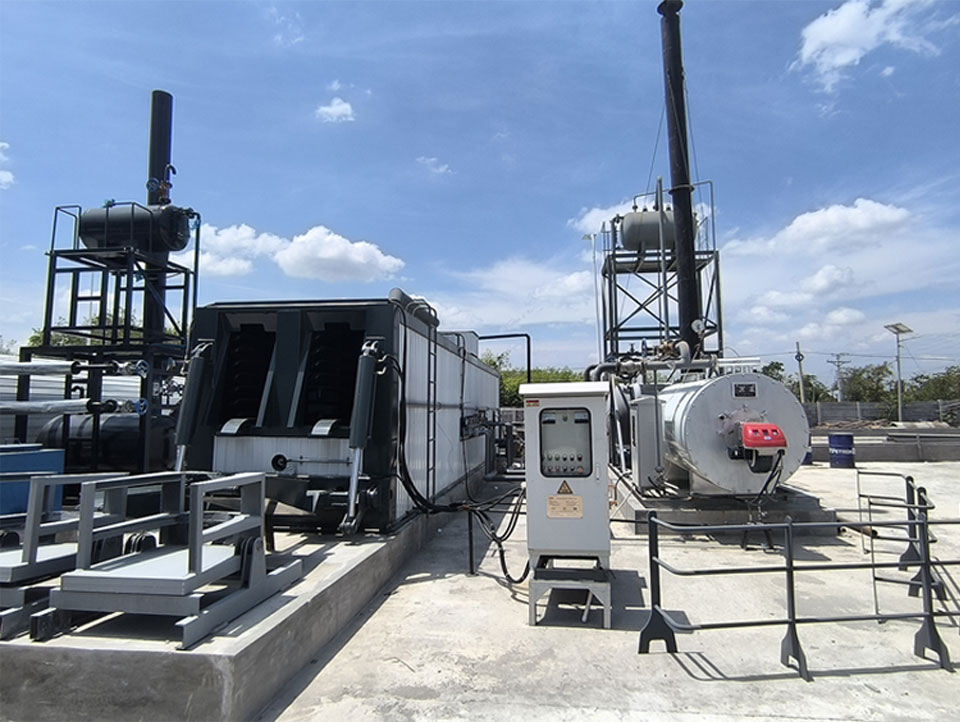
The equipment is heated indirectly by closed warehouse + heat transfer oil. Iron bucket/ton bag is placed in closed heating cavity, heat is uniformly conducted, solid bitumen melts and flows downward into lower oil storage tank by gravity, and bitumen and packaging are automatically separated.The whole process uses hydraulic mechanism to complete loading and pushing unloading, reducing manual intervention; molten bitumen is filtered and removed impurities, and then transported to storage tank by high temperature bitumen pump, and residues and empty barrels are discharged uniformly.The whole process can achieve extremely low bitumen residue, controllable temperature at the same time, effectively retain the original performance of bitumen, ensure uninterrupted supply of mixing station, and meet the dual requirements of safe production and environmental protection control.

3.How Does a Bitumen Decanter Work?

Modern mainstream bitumen decanter equipment uses indirect heating of heat transfer oil as the core process. Diesel or gas burner heats heat transfer oil. High temperature heat transfer oil circulates in the whole coil to heat the package through radiation, heat conduction and convection. Flame and combustion flue gas do not directly contact bitumen, giving consideration to safety, melting efficiency and bitumen quality protection.
The complete workflow is divided into 5 steps:

loading bucket (bagging) process

For standard 200kg iron drum: remove the cover in advance, put the iron drum upside down; send the iron drum into the heating melting bin through hydraulic pushing mechanism and crane lifting appliance.
·Batch equipment: a batch of iron barrels placed in the tray, the whole into the warehouse, the whole batch after the completion of melting unified empty barrels.
·Continuous hydraulic equipment: hydraulic cylinder continuously push, new bucket from one end into, empty iron bucket from the other end of the equipment automatically pushed out, to achieve uninterrupted continuous operation.
For the ton bag: the crane will lift the ton bag, cut open the packaging bag, the solid bitumen block falls into the heating chamber, and the packaging bag is recycled.

First-stage heating and melting

The high temperature heat conducting oil is continuously circulated and heated on the inner wall and bottom coil of the bin body, the barrel wall is heated and heated, and the bitumen in the barrel is gradually softened and melted; the liquid bitumen flows downward through the gap of the grid by gravity and falls into the lower oil storage tank, and the bitumen in the iron barrel continuously flows out; the grid prevents the iron sheet debris and sundries from falling, and realizes preliminary filtration.

Secondary heating and tempering of oil collecting bin

The molten bitumen is collected in the thermal insulation oil storage tank at the lower part of the equipment, and the heat conducting oil coil is also arranged in the tank to supplement the temperature of bitumen for the second time, so as to maintain the bitumen temperature above 100 - 130℃ and reach the pumping condition of bitumen pump.Some models are equipped with stirring mechanism to prevent local agglomeration of bitumen; moisture in bitumen evaporates under high temperature environment to realize dehydration; molten bitumen further removes impurities through filter screen to ensure cleanliness of output bitumen.

Pumping and conveying discharge

The liquid level sensor is built in the oil storage tank. When the liquid bitumen reaches the set level, the high temperature bitumen gear pump will start automatically, and the molten bitumen will be transported to the external bitumen storage tank through the heat preservation tracing pipeline, or directly supplied to the  asphalt  mixing plant system. When the liquid level drops to the lower limit, the pump will stop automatically, realizing automatic discharge.

empty packaging discharge, cycle operation

Continuous equipment: the empty iron barrel after melting is pushed out of the equipment from the other end by the newly entered barrel to realize uninterrupted circulation.
Batch type equipment: the whole batch melting is finished, the tray is extracted, the empty barrel is cleaned, and the next batch of iron barrels to be melted is loaded.
The whole process relies on PLC control system for unified control, temperature sensor, pressure switch and liquid level alarm for real-time monitoring of equipment status, and safety interlocks such as over-temperature protection and cryopump locking are configured to avoid damage to equipment and bitumen materials due to misoperation.

4.Main Components of a Bitumen Decanter

Regardless of batch or continuous decanter equipment, the core components are generally the same and are divided into two categories: main process components and auxiliary supporting components.
core process component

melting chamber

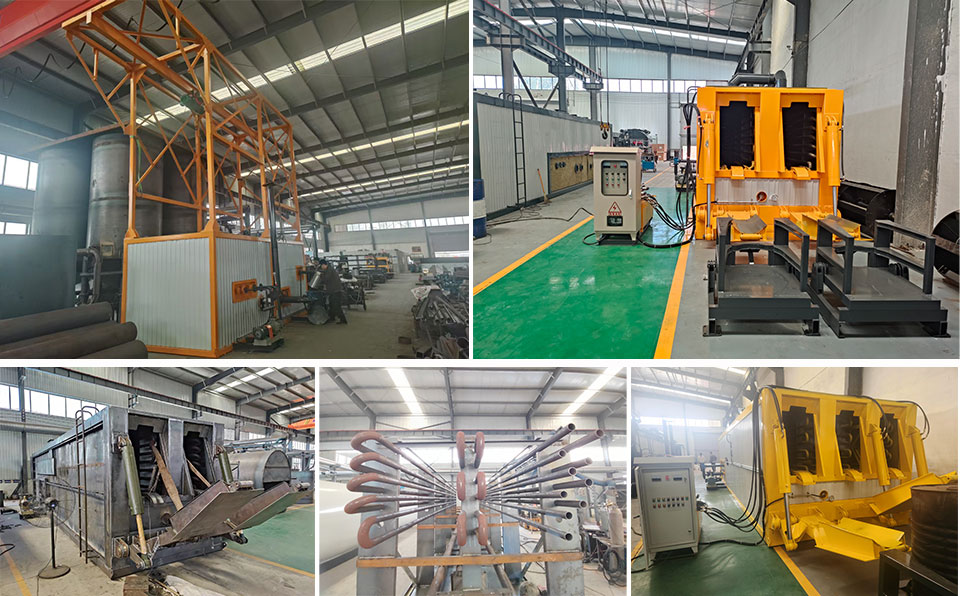
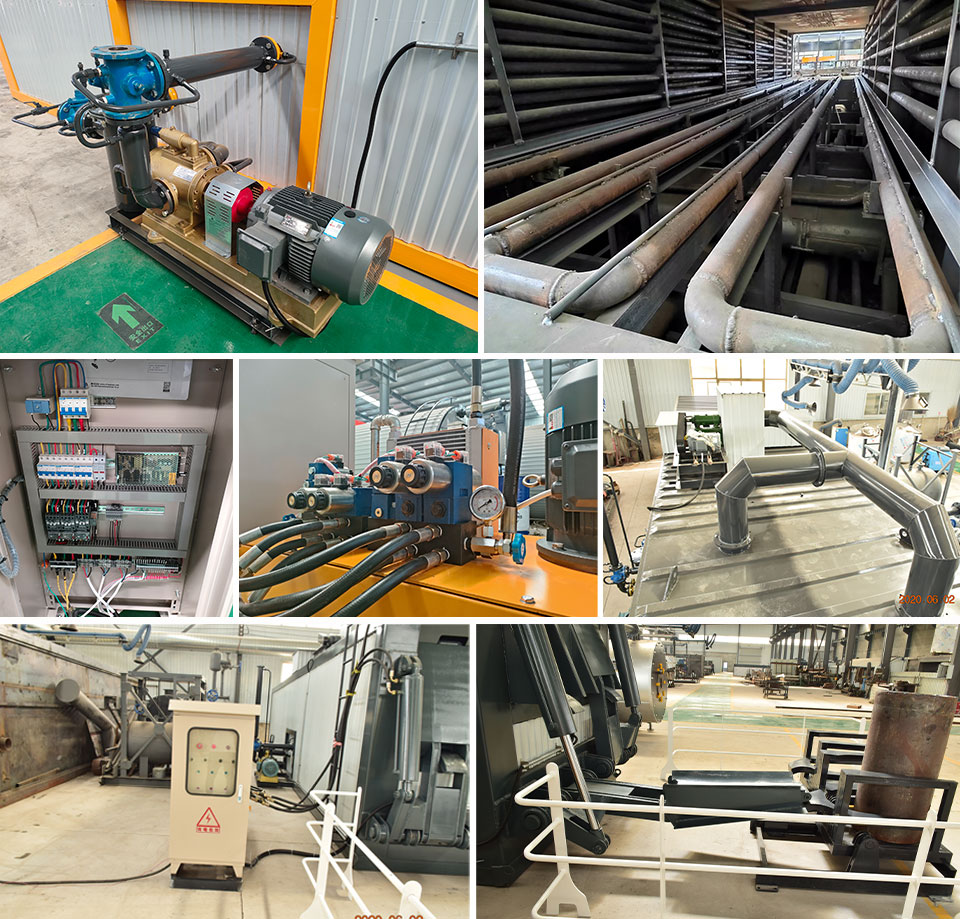
The heat preservation cavity of the equipment body is divided into an upper melting area and a lower oil collecting reservoir.The outer part is steel structure shell, and the inner part is filled with high-density rock wool insulation layer to reduce heat loss; the upper part is used for placing iron bucket/ton package bitumen, and the lower part is used as molten bitumen temporary storage pool, and the pool is paved with heat transfer oil heating coil.The insulation effect directly determines the energy consumption of the whole machine, and the thickness of the insulation layer of high-quality equipment can reach 50‑150 mm.

Material Handling Hydraulic System

consists of a hydraulic pump station, a pushing oil cylinder, a turnover mechanism and a tray guide rail.Continuous models rely on hydraulic pressure to automatically push iron drums in and out of the warehouse; batch models rely on pallets to complete the whole batch of materials in and out; ton package models are equipped with crane lifting points.The whole set of mechanisms reduces manual handling of high temperature heavy objects and improves the level of automation.

Heat transfer oil heating system

Including heat transfer oil furnace, burner (fuel oil/gas), heat transfer oil circulating pump, complete seamless heating coil.High temperature heat transfer oil circulates through the melting bin and oil reservoir coil to realize indirect heating, which is the heat source heart of the whole equipment.

bitumen pumping output system

Special bitumen gear pump for high temperature, equipped with heat preservation pipeline and filter, conveying qualified liquid bitumen in oil storage tank to outside; filter isolates scrap iron and impurities, prevents impurities from entering the rear mixing station system, and protects bitumen metering pump.

Electric PLC control system

Integrated temperature sensor, liquid level switch, pressure protection, alarm module, support full automatic or semi-automatic operation.It can set melting temperature, pump start and stop liquid level, with over-temperature alarm, low temperature prohibit pump start and other safety interlocks, high-end models support remote signal docking mixing station central control system.

5.Bitumen Decanter Working Process

The classification dimensions of bitumen decanter equipment on the market mainly include: processing packaging type, operation mode (batch/continuous), equipment movement attribute, heating mode, and comprehensive judgment shall be made in combination with raw material packaging form and capacity demand during project selection.

Divided according to processing packaging type

Special equipment for removing iron drums

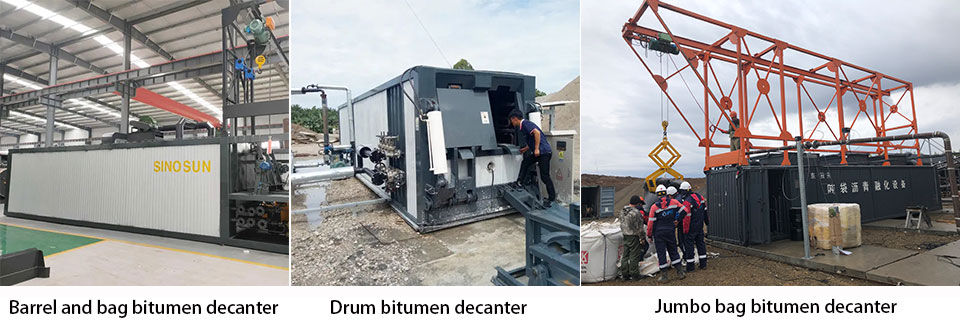
200kg standard steel bitumen drum is suitable for the market, which is the model with the largest use of highway projects. The iron drum is opened upside down and sent into the warehouse for melting.Advantages: mature technology, moderate equipment cost; disadvantages: a small amount of bitumen will remain on the inner wall of the iron drum.

Special bag stripping equipment for tons of bags

For 1-ton ton package solid bitumen, the crane lifts it into the package and cuts it open. The bitumen block directly falls on the heating coil and melts.Ton package bitumen has larger contact area with heat source, faster melting speed and little material residue, suitable for large-scale projects.

Barrel and bag removal machine (multifunctional model)

The same equipment can handle both iron drums and tons of bitumen.It is suitable for the scene where the source of materials on the construction site is complex and iron drums and ton packages are alternately supplied. The equipment has strong versatility and relatively high initial investment.

2. Divided according to operation mode

Batch bitumen decantering equipment

Multiple barrels are placed on the same tray, and the whole tray is pushed into the melting bin.
Complete guide to bitumen decanterling equipment: principle, structure, selection and matching scheme with bitumen mixing plant
 
After all the melting is completed, the whole tray is pulled out to clean the empty barrel, and then loaded into the next batch.Advantages: simple structure, low cost, convenient maintenance; disadvantages: intermittent operation, limited production capacity, suitable for small and medium-sized projects, intermittent construction scenarios.

Continuous unloading equipment for crane loading

Depending on the crane crane, the iron drums are hoisted into the warehouse one by one, and the melted empty drums are pushed out from the other end. It can continuously operate without interruption. The production capacity is higher than that of batch models, suitable for medium-sized mixing stations.

Fully automatic hydraulic continuous barrel stripping equipment

Full hydraulic automatic feeding push, no need for frequent lifting, automatic turnover of iron drums, push in and out of the warehouse, manual only need to assist in placing iron drums, the highest degree of automation, large output capacity, suitable for long-term continuous production of large asphalt mixing plants.

Move properties according to equipment

·Fixed bucket removal equipment: fixed installation on site concrete foundation, suitable for permanent station use of mixing station.
·Skid mounted mobile drum removal equipment: integral skid-mounted frame, no complex infrastructure, trailer can be transferred, suitable for multiple site rotation, field temporary projects.

according to the heating method

The mainstream model is indirect heating of heat transfer oil (recommended); a few simple models use open fire direct burning and hot air heating. Although the equipment is cheap, it is easy to cause local aging of bitumen, and the potential safety hazard is greater. At present, large-scale projects are rarely used; some high-end models increase waste heat recovery to further reduce fuel consumption.

6.Types of Bitumen Decanters

The nominal capacity unit of bitumen decanter equipment is ton/hour (t/h), which represents the weight of liquid bitumen produced per hour.Actual production capacity will be affected by ambient temperature, bitumen grade viscosity, packaging form, whether continuous operation, low temperature winter conditions actual production capacity will be reduced, it is recommended to reserve 10‑20% margin when selecting.
Common Capacity Stages
·Small model: 2‑5t/h, suitable for small mixing station and maintenance project;
·Medium mainstream model: 4‑8t/h, selected for most asphalt mixing plants in China;
·Large-scale high-capacity models: 8‑15t/h, large-scale stations, large-scale infrastructure projects.
Core Technical Parameters Reference Table


Parameter
Typical Industry Range Additional Notes
Output Capacity 2–15 t/h Mainstream: 4–10 t/h
Number of Drums per Batch 18–60 drums Depends on the number of equipment rails; 2–3 rails are most common
Lower Oil Storage Tank Capacity 9–22 m³ Provides buffer storage
Heat Transfer Oil Operating Temperature 200–240°C Indirect heating source
Bitumen Discharge Temperature 120–160°C Meets pumping process requirements
Heat Transfer Oil Heater Capacity 300,000–1,200,000 kcal/h Larger capacity requires a higher heat load
Total Installed Power 10–50 kW Includes pump, hydraulic system, and control system; mainstream: 15–25 kW
Bitumen Pump Flow Rate 9–20 m³/h High-temperature gear pump
Overall Dimensions (L × W × H) 8–12 m × 2.2–3 m × 2.4–2.6 m Skid-mounted models are convenient for container transportation
Total Equipment Weight 9–25 tons Increases with equipment size
Insulation Layer 50–150 mm rock wool Insulation thickness directly affects energy consumption


7.Bitumen Decanter Capacity and Technical Specifications

The actual output of the same barrel removal equipment varies greatly under different working conditions. The melting efficiency is jointly determined by multiple factors such as equipment design, bitumen raw materials, environment and operation and maintenance. The construction unit can optimize from the following dimensions to improve production capacity and reduce fuel consumption.

heating system design and heat exchange area

The heat transfer efficiency is directly determined by the arrangement density of heat transfer oil coils. The larger the heat transfer area of coils, the faster the heat transfer.Zonal temperature control design (independent temperature control of upper melting bin and lower oil reservoir) is better than single heating; some equipment use combustion waste heat recovery, which can save energy by 20 ‑ 30%.Heat transfer oil aging coking occurs after long-term use, which will seriously reduce the heat transfer efficiency, and it is necessary to replace the heat transfer oil regularly.

warehouse insulation performance

Insulation layer material, thickness, shell sealing is the key point of energy saving.For equipment with poor heat preservation, a large amount of heat is dissipated outward, the burner is frequently started, and the production capacity is greatly attenuated in winter; the temperature drop of the warehouse after the shutdown of high-quality equipment can be controlled within 1 ℃ per hour.

Properties of bitumen raw materials themselves

High grade hard pitch (high softening point) requires more heat to melt and melts slowly; low viscosity pitch flows better and flows faster.Too much moisture in raw materials will consume a lot of heat for evaporation, reducing melting efficiency; ton package bitumen has a large heating area, melting efficiency is better than iron bucket bitumen.

Equipment structure and operation mode

The average production capacity of the continuous hydraulic model is much higher than that of the batch intermittent model; the iron barrels can only be fully heated if they are placed at a reasonable spacing and inverted in place; the grille in the warehouse is smooth and free of debris, ensuring that the molten bitumen can quickly flow into the oil storage tank; The filtration device is cleaned in time to prevent blockages.Automatic PLC precise temperature control, avoid overheating invalid heating, but also reduce energy consumption.

Site environmental conditions

Environmental temperature has a significant impact on efficiency. In winter, the heat loss of equipment is large and the melting speed decreases. There is no wind and rain protection in the outdoor layout, and the heat loss is aggravated.

Operation and maintenance and personnel operation

Regularly clean the coking on the outer wall of the coil, clean the filter, check the hydraulic mechanism; standardize the feeding operation, completely remove the cover, and do not overload the filling; regularly repair the instrument sensor to ensure accurate temperature and liquid level acquisition.

8.Factors Affecting Bitumen Melting Efficiency

Bitumen decanterling equipment is mainly used for projects where the raw material is solid bitumen in barrels and tons. As long as there is no direct supply of liquid bitumen tankers on site, it is necessary to configure decanterling equipment. Typical application fields include:

Production of hot mix bitumen mixture in bitumen mixing plant

This is the most mainstream application scenario, continuously supplying qualified liquid bitumen for intermittent and continuous bitumen mixing stations for paving construction of expressways, national and provincial roads and municipal roads.

Road maintenance works

Highway maintenance stations, on-site hot recycling projects, and many remote maintenance sites have inconvenient transportation of liquid bitumen. Barreled bitumen is used with decanter equipment to melt it on-site.

Building waterproofing, bridge deck waterproofing, tunnel engineering

Waterproof project requires high temperature accuracy of bitumen discharge (usually 160 ℃ ± 5 ℃), stable output of liquid bitumen from barrel removal equipment, supply of modified bitumen, waterproof membrane production line, used for roof waterproofing, bridge deck paving, tunnel seepage prevention.

Modified bitumen, bitumen emulsion production line supporting

As a front-end feeding equipment, the solid barrel bitumen is melted into liquid state and supplied to modification and emulsification equipment for further processing.

Storage and transportation, inland and overseas engineering projects

For inland, border and overseas aided projects, it is difficult to transport liquid bitumen, relying heavily on imported barrels of bitumen. The debarkling equipment melts solid bitumen and stores it in storage tanks for subsequent distribution and use.

9.Bitumen Decanter ApplicationsHow to Integrate a Bitumen Decanter with an Asphalt Plant

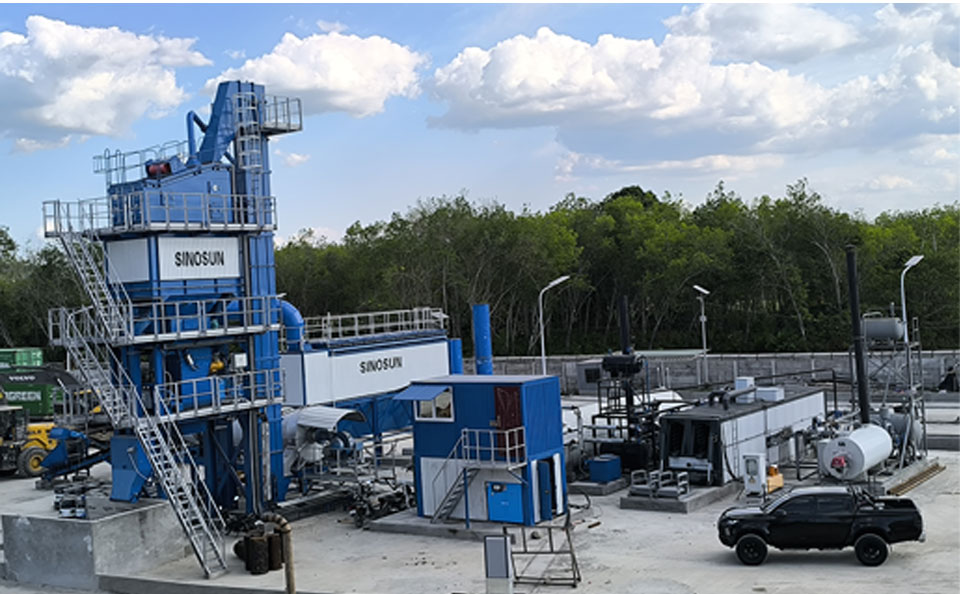
The bitumen decanterling equipment is positioned as a front-end melting supply unit in the whole system, not directly replacing the bitumen storage tank.The most mature and reliable scheme in the industry is: debarkling equipment → intermediate bitumen storage tank → asphalt mixing plant bitumen system; a few small mobile projects can realize short-distance direct supply mixing plant metering system, but it is not recommended for long-term use, lack of storage tank buffer, easy to cause supply fluctuation.
Complete integration requires seven key points:

Capacity matching, reserve buffer margin

The melting capacity per hour of the debarker equipment shall be greater than or equal to the maximum bitumen consumption per hour of the asphalt mixing plant.
For example: 2000  asphalt  mixing plant, the maximum output of 160 t/h mixture, bitumen proportion of about 5%, bitumen consumption of 8 tons per hour, then the selection of decanter equipment is recommended 8 ‑ 10 t/h specifications.
The total storage capacity of supporting storage tanks is recommended to meet the consumption of mixing station for 1.5 ‑ 2 days, which is used to buffer production fluctuation. The decanterling equipment can offset peak melting reserve bitumen.

Site location arrangement

Barrel removal equipment shall be close to bitumen storage tank as far as possible to shorten high temperature bitumen conveying pipeline and reduce heat dissipation of pipeline; sufficient space shall be reserved for iron barrel and ton package lifting and loading and empty barrel stacking; fuel storage position and power supply access point shall be reserved to facilitate later maintenance.Skid mounted models do not require complex concrete foundations, only a flat hardened floor.

Pipeline and filtration system design

The outlet of bitumen pump of decanter equipment is connected with thermal insulation tracing bitumen pipeline connected to storage tank, and valve, filter and expansion joint are arranged on pipeline.The bitumen pump is automatically started and stopped depending on the liquid level signal of the oil storage tank of the barrel removal equipment. The pump is started when the liquid level is high and stopped when the liquid level is low, so as to realize automatic material transfer.

Heating system coordination

The temperature of bitumen produced by decanter equipment is 120 ‑ 160 ℃. After entering bitumen storage tank, the heat transfer oil system of storage tank itself continues to maintain process temperature.If the mixing station already has a high-power heat-conducting oil furnace, a shared heat-conducting oil heat source can be evaluated during the design stage; most new project decanter equipment is equipped with independent heat-conducting oil furnaces, so the systems do not interfere with each other, making debugging and maintenance simpler.

Control system signal docking

Connect the liquid level, temperature and fault alarm signals of the barrel stripping equipment to the central control system of the mixing station, and the operator can master the operation status of the barrel stripping equipment in the control room of the mixing station; set safety interlock: the bitumen temperature cannot reach the pumping temperature, and the pump is prohibited to start; the high liquid level alarm of the storage tank is linked to prevent overflow of the tank.

Public works and safety supporting facilities

Connect to three-phase 380V industrial power supply; supply fuel; ground the equipment; provide an bitumen leakage oil pan to prevent high-temperature bitumen from spilling and polluting the ground; connect the flue gas collection and emission interface to exhaust gas treatment to meet environmental protection; configure fire-fighting facilities on site.

Commissioning and production

After the equipment is in place, complete the pressure test of heat conduction oil pipeline and insulation inspection; debug the hydraulic pressure, pump and control system under no load; put a small amount of bitumen into trial production, verify the temperature and discharge flow; establish standardized operation flow, carry out operator training simultaneously, and implement the regular maintenance plan of coil, filter and hydraulic parts.

10.Practical Suggestions on Selection of bitumen decanterling Equipment

1. Priority shall be given to confirm the packaging form of raw materials: all the construction sites are 200 kg iron drums, and the iron drum type shall be selected; the ton package shall be the main type, and the bag type shall be selected; the iron drum ton package shall be supplied, and the all-in-one machine shall be selected.
2. Capacity should not be just full of mixing station demand, 10 ‑ 20% margin must be reserved, considering capacity attenuation under low temperature conditions in winter.
3. Heat transfer oil is preferred as heating method, and direct burning of open flame is avoided as far as possible. Simple type, considering bitumen quality and safe production.
4. Pay attention to the insulation configuration and don't blindly lower the purchase cost. The fuel cost of equipment with poor insulation will increase significantly in the later stage.
5. The project is often relocated, and priority is given to skid-mounted mobile type; fixed mixing station station is selected, and fixed equipment is selected.
6. Focus on automatic configuration, PLC control, automatic interlocking of liquid level and pump, over-temperature alarm, reduce manual duty and reduce the risk of misoperation.
7. Verify equipment interfaces, confirm bitumen output pipeline specifications and electrical conditions, and ensure seamless connection with existing bitumen storage tanks and mixing plant systems.
epilogue
With the continuous promotion of infrastructure and overseas road projects, there are more and more use scenarios for barrel and ton package bitumen. As the core equipment for solid bitumen conversion into liquid bitumen, bitumen decanter equipment replaces the traditional manual treatment mode with high risk and high loss, and has irreplaceable value in safety, environmental protection, material utilization rate and continuous production guarantee.
When selecting models, it is not only necessary to look at the equipment quotation, but also to comprehensively evaluate the production capacity, heating process, insulation and automation configuration, combine the raw material packaging and site environment, and at the same time do a good job of system integration with asphalt mixing plant and bitumen storage tank, so as to give full play to the equipment performance, reduce the comprehensive operation cost of the project, and ensure the stable and efficient production of road engineering.


Pre:first page Next:Philbex 2013

Office

  • Philippines:17F High Street South Corporate Plaza Tower 2, 26thStreet cor. 11th Ave, BGC, Taguig

    TEL: +63 908 868 1506

    Email: eagloballbuilders@gmail.com

  • Singapore:60 Paya Lebar Road, #12-03, Paya Lebar Square, Singapore 409051

  • Thailand: 948/22 Rama 2 Rd, Mahachai Samutsakon 74000

    TEL: +0642 85 2984 Mr. Chirapat

  • Iran: Tehran, Vanak, Sheikh Bahaei square, Sadaf Tower, No.47

Contact Us

  • Linkedin
  • Facebook
  • Twitter
  • YouTube
Copyright © Zhengzhou SINOSUN Machinery CO.,LTDPrivacy Policy