HOME > Press&Media > Events >
Batch Asphalt Plant VS Drum Asphalt Mix Plant

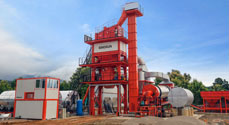
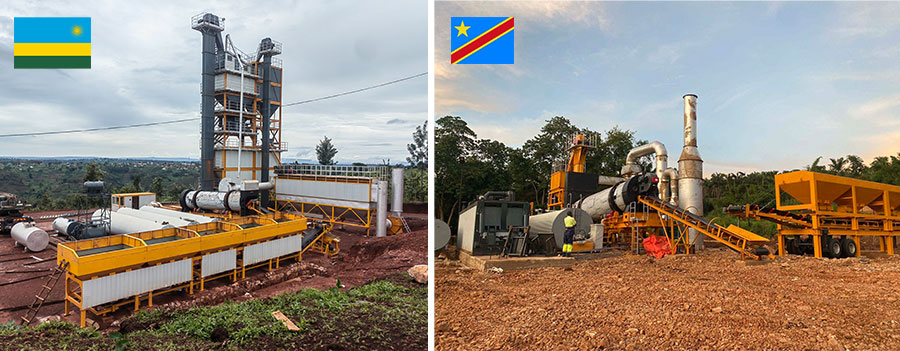
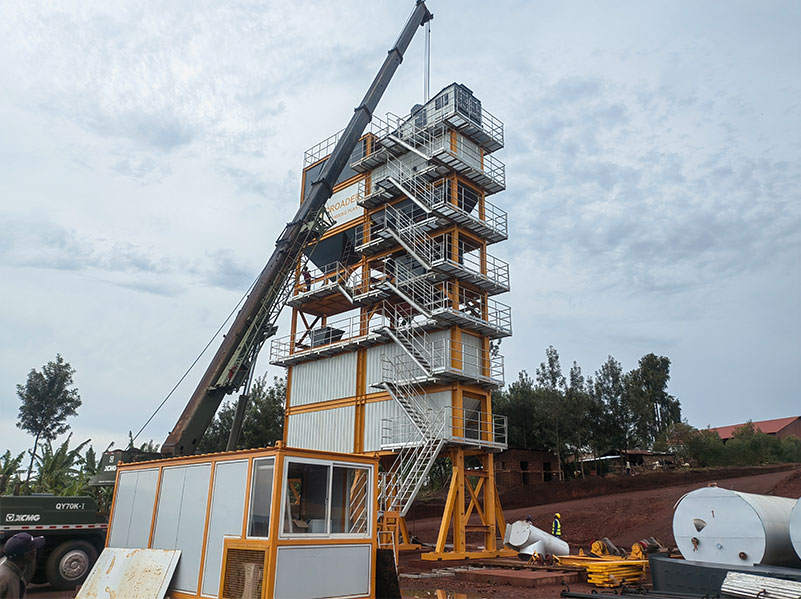
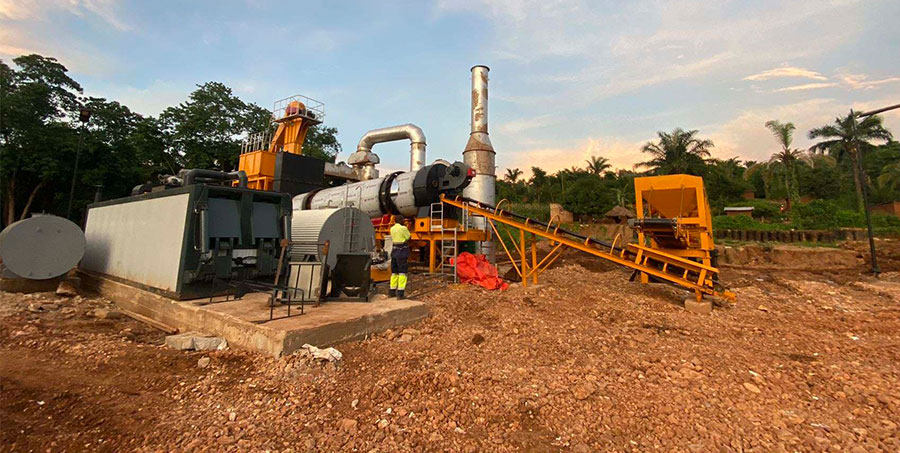
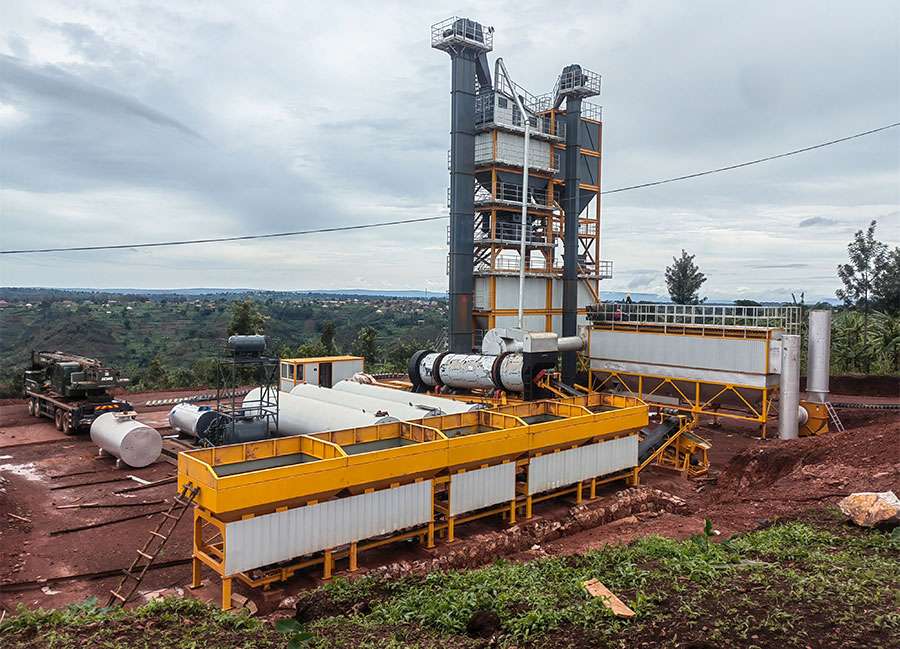
During the operation of road engineering construction projects, asphalt mixing plants serve as core equipment for producing hot-mix asphalt mixtures. Different types of asphalt plants directly determine pavement quality, construction efficiency and project costs. At present, the two globally mainstream types of asphalt plants are intermittent batch asphalt plants and continuous drum mix asphalt plants. They differ drastically in working principle, quality control, production capacity, cost and applicable scenarios. Selecting the right type enables better adaptation to local working conditions and budget control. Our company has real project references: an 80 t/h drum mix asphalt plant in the Democratic Republic of the Congo (DRC) and a 240 t/h batch asphalt plant in Rwanda. We will conduct an in-depth analysis of the core disparities between the two equipment models based on these two cases, providing references for your engineering model selection.

1. Working Principles

The fundamental distinction between batch asphalt plants and drum mix asphalt plants lies in their intermittent versus continuous production modes, which is the root cause of all subsequent differences.

1.1 Batch Asphalt Plant: Precise Intermittent Production

Batch asphalt plants operate in a split-cycle batch mode. Its core workflow goes as follows: Aggregate feeding from cold bins → heating in drying drum → hot aggregate lifting → grading via vibrating screens → storage in hot bins → precise weighing (aggregate, asphalt, mineral filler) → twin-shaft forced mixing → storage or discharge of finished mixture.
Each procedure is completed independently. One full batch takes approximately 40 to 50 seconds, and every batch of asphalt mixture follows this complete process. After one batch is discharged, the feeding, weighing and mixing cycle restarts for the next batch, featuring intermittent and periodic production. Centered on "step-by-step control", this mode allows accurate adjustment of every process link, laying a solid foundation for high-quality mixture production.


1.2 Drum Mix Asphalt Plant: High-Efficiency Continuous Production

Also known as continuous asphalt plants, drum mix plants adopt an integrated single-drum production design. Drying, heating and mixing are completed simultaneously inside one rotating drum without intervals or batch divisions.
Its workflow: Proportional continuous feeding from cold bins → synchronous drying, heating and asphalt spraying & mixing inside the drum → uninterrupted discharge of finished mixture.
Drum mix plants eliminate the hot aggregate screening and separate weighing procedures used in batch plants. Mix proportions are controlled through calibration of cold feeders. Raw materials flow continuously from feeding to discharging with no downtime, enabling stable round-the-clock non-stop production.

2. Quality Control

Batch plants deliver highly stable, precise mix ratios, while drum mix plants offer standard uniform blending. The durability and service life of pavements hinge primarily on the proportion accuracy and homogeneity of asphalt mixtures — a key competitive advantage of batch asphalt plants.

2.1 Batch Asphalt Plant: ±0.5% High Precision for High-Grade Pavements

Batch plants are fitted with independent electronic weighing systems and hot aggregate vibrating screens, forming dual safeguards for proportion accuracy. Vibrating screens classify heated hot aggregates by particle size and remove oversize or undersize impurities. High-precision sensors weigh aggregate, mineral filler and asphalt separately, restricting proportion error strictly within ±0.5%. Equipped with twin-shaft forced mixing, 360° shear blending ensures asphalt coats aggregates evenly. It can produce high-grade special mixtures such as SMA, OGFC and modified asphalt, fully meeting stringent quality standards for expressways, airport runways and bridge deck paving.

2.2 Drum Mix Asphalt Plant: ±2% Standard Precision for Conventional Pavements

Without hot screening and real-time weighing units, drum mix plants rely solely on preset feed ratios from cold feeders. Affected by fluctuations in raw material moisture, particle size and feeding stability, their proportion error normally stands at around ±2%. Though overall mixture uniformity is guaranteed, unqualified aggregate sizes cannot be removed, leading to minor gradation deviations. They are only suitable for manufacturing standard asphalt mixtures for low-demand projects including rural roads, municipal auxiliary roads and parking lots.

3. Production Capacity & Costs: High Investment with High Returns vs. Low Investment with High Cost Performance

Engineering model selection requires balancing output demands, budget constraints and long-term operation costs. The two plant types show stark gaps in capital investment, energy consumption and maintenance, suiting projects of different scales.

3.1 Batch Asphalt Plant: High Investment, High Output, High Maintenance

1. Capital Investment: Complex structure incorporating vibrating screens, hot bins, high-precision weighing systems and forced mixers. It incurs high upfront purchase costs, requires large floor space and has a lengthy installation and commissioning cycle.
2. Production Efficiency: Restricted by intermittent cycles, waiting time is needed for weighing and discharging each batch, resulting in moderately lower continuous throughput. However, it supports flexible start-stop operation and rapid switching of mixture formulas, fitting multi-condition, small-batch and multi-specification production.
3. Operation & Maintenance: Intermittent heating raises energy consumption. Abundant precision components demand regular upkeep by professional technicians, leading to higher long-term maintenance costs. Nevertheless, material waste is minimal and finished product yield is high, lowering overall long-term quality-related expenses.

3.2 Drum Mix Asphalt Plant: Low Investment, Stable Output, Easy Maintenance

1. Capital Investment: Compact structure centered on a rotating drum, with no hot screening or weighing equipment. Its procurement cost equals only 60%–70% of a same-capacity batch plant. It occupies less ground area, and modular design facilitates transportation and assembly.
2. Production Efficiency: No idle waiting time delivers steady, high continuous throughput, ideal for long-term nonstop construction. Yet formula replacement is cumbersome and startup/shutdown takes longer, so it only fits large-scale continuous production with a single fixed formula.
3. Operation & Maintenance: Continuous heating boasts superior thermal efficiency, cutting fuel and electricity usage. Its simple structure contains few wearing parts; regular upkeep can be handled by ordinary workers, bringing low running costs and outstanding cost performance.


4. African Project Cases: DRC Drum Mix Plant vs. Rwanda Batch Plant

We have supplied 2 sets of drum asphalt plants to the Democratic Republic of the Congo and one 240 t/h batch asphalt plant to Rwanda. Africa’s infrastructure sector is booming, yet working conditions, budgets and quality requirements vary widely across nations. The choice of an 80 t/h drum mix plant in the DRC and a 240 t/h batch plant in Rwanda perfectly illustrates the matching logic for the two equipment types.

4.1 80 t/h Drum Mix Asphalt Plant in DRC: Suited for Low-Cost Ordinary Road Construction

As a developing nation in Central Africa, the DRC faces massive road infrastructure demand but constrained budgets, relatively low construction standards and scattered job sites, mostly for rural roads and provincial ordinary national highways. A local road project opted for the 80 t/h drum mix plant for these core reasons:
1. Cost Compatibility: Low equipment purchase cost; modular split transport adapts to the DRC’s underdeveloped logistics and shortage of heavy vehicles, slashing transport and installation expenses.
2. Matching Throughput: The 80 t/h capacity matches local material supply, hauling capacity and construction pace, avoiding output surplus and waste.
3. Simple Maintenance: Straightforward structure allows local general laborers to operate and maintain the unit after brief training, resolving the continent’s shortage of skilled technical staff.
4. Climate Adaptability: Key components receive anti-corrosion treatment for the DRC’s hot, humid tropical climate. Its combustion system accommodates low-grade local fuel to sustain stable long-term operation.

4.2 240 t/h Batch Asphalt Plant in Rwanda: Suited for High-Grade Large-Scale Infrastructure

Rwanda has seen steady economic growth in recent years, prioritizing high-grade infrastructure including expressways, urban arterial roads and airport access roads with strict pavement quality standards, plus large project scales and long construction timelines. A flagship local highway project selected the 240 t/h batch plant for these key strengths:
1. Quality Compliance: ±0.5% proportion accuracy enables production of modified asphalt and other premium mixtures, satisfying Rwanda’s high-grade highway standards and extending pavement service life.
2. Ample Throughput: The 240 t/h large capacity supports continuous construction over long distances and wide areas, ensuring schedule delivery for mega infrastructure schemes.
3. Flexible Adaptability: Fast formula switching caters to material demands for subgrade, pavement, bridge decks and other construction phases, accommodating complex project conditions.
4. Long-Term Value: Despite higher upfront investment, stable finished quality and extended maintenance intervals keep long-term operational costs under control, aligning with Rwanda’s long-term high-quality infrastructure development roadmap.

5. Summary of Core Differences & Model Selection Recommendations

5.1 Comparison Table of Core Differences

表格
Comparison Dimension Batch Asphalt Plant (Intermittent) Drum Mix Asphalt Plant (Continuous)
Production Mode Intermittent cyclic batch production Continuous flow, integrated single-drum production
Mix Proportion Precision ±0.5%, ultra-high precision ±2%, standard precision
Applicable Mixtures High-grade & special mixtures (SMA, modified asphalt) Conventional asphalt mixtures
Capital Investment High Low (60%–70% of same-capacity batch plants)
Capacity Characteristics Flexible start-stop, fast formula switch, slightly lower continuous output Steady high continuous throughput, slow formula adjustment
Maintenance Complexity High; requires professional technicians Low; operable and serviceable by general workers
Typical Case 240 t/h plant in Rwanda (high-grade highways) 80 t/h plant in DRC (rural / ordinary national highways)

5.2 Engineering Selection Guidelines

1. Choose Batch Asphalt Plant preferentially :
1. The project involves high-grade works such as expressways, airport runways and bridge deck paving;
2. Frequent formula changes and small-batch multi-specification production are required;
3. Sufficient budget is available, with priorities on long-term pavement quality and durability.

2. Choose Drum Mix Asphalt Plant preferentially:
1. The project covers ordinary works including rural roads, municipal auxiliary roads and parking lots;
2. Budget is limited, with focus on low cost and high value for money;
3. Large-scale, long-term continuous construction using one fixed mixture formula;
4. Remote job sites with poor logistics and a lack of professional technical personnel.
 

Pre:first page Next:Philbex 2013

Office

  • Philippines:17F High Street South Corporate Plaza Tower 2, 26thStreet cor. 11th Ave, BGC, Taguig

    TEL: +63 908 868 1506

    Email: eagloballbuilders@gmail.com

  • Singapore:60 Paya Lebar Road, #12-03, Paya Lebar Square, Singapore 409051

  • Thailand: 948/22 Rama 2 Rd, Mahachai Samutsakon 74000

    TEL: +0642 85 2984 Mr. Chirapat

  • Iran: Tehran, Vanak, Sheikh Bahaei square, Sadaf Tower, No.47

Contact Us

  • Linkedin
  • Facebook
  • Twitter
  • YouTube
Copyright © Zhengzhou SINOSUN Machinery CO.,LTDPrivacy Policy