HOME > Press&Media > Events >
Types of Asphalt Plants

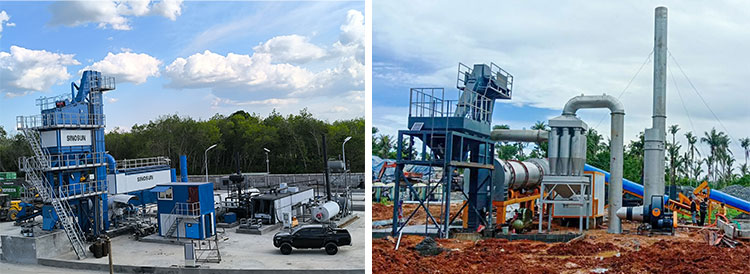
If you are engaged in road construction, municipal engineering and related work, you must not avoid the core equipment of "asphalt plant". It is like the "heart" of road construction, and the produced asphalt mixture directly determines the strength, durability and service life of the road surface. But many people feel confused when choosing an asphalt plant - there are many types of asphalt plants on the market, which one is suitable for their own project? Should I choose continuous or batch type? How to choose between fixed and mobile?

In fact, the classification of asphalt plants has a clear logic, focusing on four dimensions: "how to mix", "how to move", "how much to produce" and "what to heat". Today, combined with my years of industry experience, I will explain the various types of asphalt plants in plain and easy-to-understand language, helping you quickly select and avoid detours.

There is no best asphalt plant, only the most suitable one for you. The 4 core classifications of asphalt plants are based on mixing method, handling method, production output, and combustion system.
 
Classification method Type 1 Type 2 Type 3
Mixing Method Continuous Drum Asphalt Plant Batch asphalt plant  
Handling Method Stationary Asphalt Plant Semi-Fixed Asphalt Plant Mobile Asphalt Plant
Production Output Less than 40t/h 40-400t/h More than 400t/h
 Fuel Types
 
Coal-Fired Oil-Fired Gas-Fired
Customize your asphalt station solution

1.Classification by Mixing Method: Continuous Drum Asphalt Plant and Batch Asphalt Plant

The mixing method is the most core difference of asphalt plants, which directly affects the uniformity and proportioning accuracy of asphalt mixture - this is also the key to determining the road surface quality. At present, there are mainly two mixing methods on the market: continuous drum type and batch type, and their application scenarios are very different, so don't confuse them.

(1) Continuous Drum Asphalt Plant: Efficient and Economical, Suitable for Large-Scale Foundation Construction

Working principle of continuous drum asphalt plant: The heating, drying and mixing of aggregates are all completed continuously in one drum, without batch operation, just like an "assembly line", which is very efficient.
Advantages: Simple equipment structure, no independent mixing pot, worry-free and cost-saving maintenance; high thermal efficiency, saving 10%-15% of energy consumption compared with batch type.
Application scenarios: Suitable for projects that need large-scale continuous production of ordinary asphalt mixture. For example, the laying of the base course of common highways and the construction of suburban secondary roads are very suitable for this kind of asphalt plant, which can not only ensure the progress, but also control the cost.
But it also has shortcomings: because it is continuous operation, it is impossible to accurately adjust the proportion of each batch of mixture. For special mixtures with high requirements on uniformity such as modified asphalt and colored asphalt, the mixing effect is not ideal. So if it is the surface course construction of high-grade highways, it is not recommended to choose this one.

(2) Batch Asphalt Plant: Accurate and Efficient, Choice for High-Grade Projects

Different from the continuous drum type, the batch asphalt plant operates in "batches". The entire production process is divided into four steps: aggregate drying, screening, metering and mixing, and every step is not perfunctory. Simply put, it is "drying one batch, screening one batch, mixing one batch", and the proportion of each batch can be accurately controlled.
Its biggest advantage is "accuracy": the aggregate error can be controlled within ±1%, the asphalt error does not exceed ±0.3%, and the mixture uniformity can reach more than 98%. Moreover, the proportion of each batch can be flexibly adjusted, which can not only produce ordinary asphalt mixture, but also produce special mixtures such as modified asphalt and colored asphalt.
Therefore, for projects with high requirements on road surface quality such as high-grade highways, airport runways and urban expressways, the batch forced asphalt plant is the first choice. Of course, it also has disadvantages: the equipment structure is complex, the initial investment and maintenance cost are higher than those of the continuous type, and the thermal efficiency is slightly lower, but for projects pursuing quality, these costs are worthwhile.

2. Classification by Handling Method: Three Mobile Types, Adapting to Different Construction Scenarios

Different projects have great differences in construction sites and mobility. Some projects are concentrated in one place with a long construction period; some projects are scattered in multiple sections and need frequent transfer. At this time, asphalt plants classified by handling method can be used, which are mainly divided into fixed, semi-fixed and mobile types.

(1) Stationary Asphalt Plant: Stable and Efficient, Suitable for Long-Term Production

The stationary asphalt plant is the most common type. It needs to be installed in a fixed site, and also needs to make hardened ground and special foundation. Once installed, it is rarely moved. But its advantages are also prominent: stable structure, large production scale, hourly output can reach 100-800 tons, and daily continuous production can reach 2000-5000 tons; moreover, it can be equipped with perfect storage, dust removal and automatic control systems, which can realize unattended operation, and the maintenance cost is relatively low.
The suitable scenarios are also clear: projects with concentrated projects and long construction periods, such as urban expressways, large industrial park roads and airport runway construction, are most cost-effective to use fixed asphalt plants, which can not only ensure output, but also meet environmental protection requirements (can be equipped with bag dust removal and desulfurization devices, and the dust emission concentration is controlled within 10mg/m³).

(2) Semi-Fixed Asphalt Plant: Balancing Flexibility and Scale

The semi-fixed asphalt plant is between fixed and mobile. The equipment components are packed in multiple trailers, transported to the construction site and then assembled on site. It does not need hardened ground, and can be put into production with only a simple foundation. Its production capacity is medium, the hourly output is between 50-200 tons, the installation period is about 7-15 days, it can be transported in 5-10 vehicles after disassembly, and the module combination can be adjusted according to engineering needs (such as adding powder silos).
This kind of asphalt plant is especially suitable for highway section construction (single section length 20-50km), municipal engineering clusters in prefecture-level cities, or projects with phased concentrated construction. It can not only ensure a certain production scale, but also move flexibly, with lower migration cost than fixed type, perfectly balancing construction efficiency and site adaptability.

(3) Mobile Asphalt Plant: Flexible and Convenient, Easy to Transfer

If the project you encounter is relatively scattered, such as county and township highway construction, rural tourism highway paving, or emergency road repair, then the mobile asphalt plant is definitely the best choice. Its core components are all equipped with tires or can be quickly disassembled, which can be transferred at any time with a traction vehicle. The installation period is short, only 1-3 days, and the floor area is 30% less than that of fixed equipment with the same capacity.
Its production capacity is small, the hourly output is between 20-40 tons, the operation is simple, and even non-professional operators can get started. The biggest advantage is "production nearby", which can effectively reduce the transportation cost and segregation of asphalt mixture. It is especially practical in small projects in remote areas, and even popular in long-distance road construction in remote overseas areas.

3. Classification by Production Output: Three Scales, Matching Different Project Volumes

In addition to mixing method and handling method, production output is also an important basis for choosing asphalt plants. Divided by hourly output (t/h), asphalt plants can be divided into small, medium and large types, covering all scenarios from "small-scale repair" to "large-scale infrastructure".

(1) Small Asphalt Plant: Less than 40t/h

The hourly output of small asphalt plants is less than 40 tons. The equipment structure is compact, the floor area is only 500-800 ㎡, the energy consumption is also low (about 8-12kW・h/t), the operation is simple, and professional personnel are not needed to get started.

The suitable scenarios are mainly small-scale construction, such as county and township highway repair, rural road construction, small municipal engineering, and road maintenance projects such as road pothole filling and crack repair. It can flexibly adjust the mixture proportion to meet the small-batch and customized production needs, with high cost performance.
 
(2) Medium Asphalt Plant: 40-400t/h
The hourly output of medium asphalt plants is between 40-400 tons. The output can be steplessly adjusted, the proportioning accuracy is high, which can not only ensure production efficiency, but also have a certain flexibility. The equipment configuration is also relatively perfect, which can produce ordinary asphalt and some modified asphalt mixtures.
Its application scenarios are the most extensive, such as prefecture-level municipal road construction, highway connection line engineering, industrial park roads, and medium-scale highway new construction projects. Many engineering practitioners will give priority to medium asphalt plants, because they can balance construction progress and cost control, with the highest cost performance.
 
(3) Large Asphalt Plant: More than 400t/h
The hourly output of large asphalt plants is more than 400 tons, up to 800 tons. It has high automation, can operate continuously for a long time, and can be equipped with large-scale storage and environmental protection systems, which is suitable for large-scale and high-efficiency construction needs.
It is mainly used in large-scale infrastructure projects with high requirements on output and quality, such as national highway main lines, large airport runways and port yard construction. It can realize large-batch and continuous production, ensure project progress, and also produce high-density and impact-resistant special asphalt mixtures to meet high-intensity operation needs.

4. Classification by Combustion System: Three Fuel Types: Coal-Fired, Oil-Fired and Gas-Fired
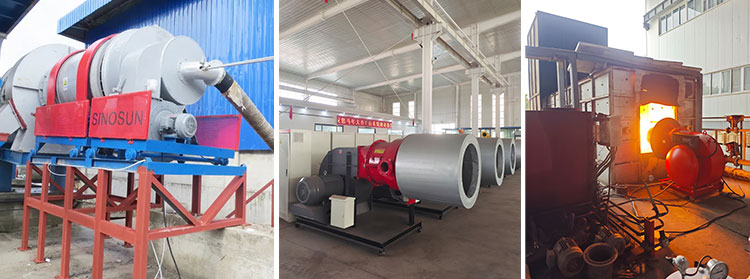
The combustion system of asphalt plant is the "heat source core", which directly affects energy consumption, environmental performance and operation cost. According to the fuel type, it is mainly divided into coal-fired, oil-fired and gas-fired types, adapting to the energy resources and environmental protection requirements of different regions.

(1) Coal-Fired Asphalt Plant:
The coal-fired asphalt plant uses coal as the main fuel. Its biggest advantage is low operation cost, which is suitable for areas with abundant coal resources and low environmental protection requirements, such as small highway construction and road maintenance projects in remote areas.
But its environmental performance is relatively poor. It will produce a lot of dust and waste gas during combustion, which is difficult to meet the construction standards of cities and areas with high environmental protection requirements. Now its application scope is getting smaller and smaller, and many places have replaced it with other environmentally friendly asphalt plants.

(2) Oil-Fired Asphalt Plant:

The oil-fired asphalt plant uses diesel, heavy oil and other fuels as fuel. It has high combustion efficiency, stable heating temperature, better environmental performance than coal-fired type, can meet the environmental protection requirements of general areas, and is one of the most widely used types at present.
Suitable scenarios include urban municipal engineering, highway section construction and other projects with certain environmental protection requirements. The disadvantage is that the operation cost is higher than that of coal-fired type, and it is greatly affected by the fluctuation of fuel prices, so the later operation cost is uncertain.

(3) Gas-Fired Asphalt Plant:

The gas-fired asphalt plant uses natural gas, coke oven gas and other gases as fuel. It has the best environmental performance, almost no dust and waste gas emission during combustion, low noise, and fully meets the strict environmental protection construction standards.
It is suitable for scenarios with high environmental protection requirements such as urban core areas and airports, but its operation cost is high, and it has requirements on gas supply conditions, which is suitable for areas with abundant natural gas resources. With the increasingly strict environmental protection regulations, the application scope of gas-fired asphalt plants is gradually expanding, which is the future development trend.

5. Asphalt Plant Selection

After talking about the types of asphalt plants, I will share some practical selection skills to help you avoid common mistakes:
 
1. Prioritize project quality requirements: For high-grade highways and airport runways, choose batch forced type; for ordinary base course construction, choose continuous drum type.

2. Combine construction mobility: For long-term concentrated construction, choose fixed type; for section construction and phased construction, choose semi-fixed type; for decentralized construction and emergency repair, choose mobile type.
 
3. Match project volume: Choose small stations for small-scale repair, medium stations for medium-scale projects, and large stations for large-scale infrastructure, avoiding "overkill" or "underutilization".
 
4. Consider environmental protection and energy: For cities and areas with high environmental protection, choose gas-fired or oil-fired type; for remote areas with abundant coal, coal-fired type can be considered (need to meet local environmental protection standards).
In fact, each type of asphalt plant has its own advantages and disadvantages, and the core is to match your project needs - whether it is quality requirements, construction scenarios, project volume or environmental protection standards, as long as you find the core needs, you can quickly choose the right type.
 
With the development of the road construction industry towards greenization and intelligence, new types of asphalt plants with recycled asphalt recycling functions are becoming more and more popular, which can not only reduce material costs, but also reduce emissions, which is worthy of attention. I hope this guide can help you understand the types of asphalt plants, avoid selection mistakes, and make the project advance more efficiently and worry-free.
 

Pre:first page Next:Philbex 2013

Office

  • Philippines:17F High Street South Corporate Plaza Tower 2, 26thStreet cor. 11th Ave, BGC, Taguig

    TEL: +63 908 868 1506

    Email: eagloballbuilders@gmail.com

  • Singapore:60 Paya Lebar Road, #12-03, Paya Lebar Square, Singapore 409051

  • Thailand: 948/22 Rama 2 Rd, Mahachai Samutsakon 74000

    TEL: +0642 85 2984 Mr. Chirapat

  • Iran: Tehran, Vanak, Sheikh Bahaei square, Sadaf Tower, No.47

Contact Us

  • Linkedin
  • Facebook
  • Twitter
  • YouTube
Copyright © Zhengzhou SINOSUN Machinery CO.,LTDPrivacy Policy