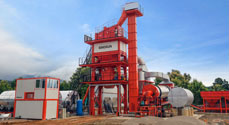
With the development of the times, different modes of transportation have increasingly diverse requirements for asphalt pavements. Ordinary bitumen can no longer meet the demands of modern engineering. For example, the requirements for paving materials differ for municipal roads used by family cars, highways, roads for heavy trucks, aircraft runways, and bridge and tunnel pavements. As a result, modified bitumen equipment has emerged to meet these needs。 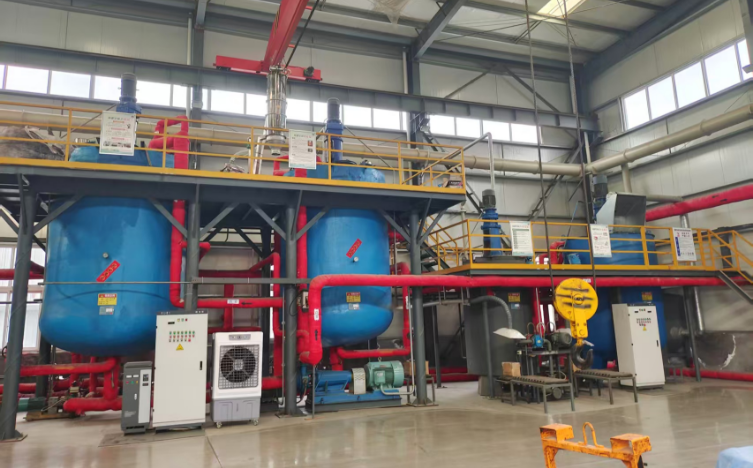
how do you choose the right equipment?
Firstly, clarify your production needs. Do you need to produce polymer-modified bitumen (such as SBS, EVA, or PE-modified bitumen) or rubber-modified bitumen? Polymer-modified bitumen is the mainstream choice for highways and high-grade roads, offering high resistance to rutting and fatigue. Rubber-modified bitumen, made from waste tire rubber, provides excellent environmental benefits, outstanding noise reduction, and crack resistance, making it particularly suitable for heavy-load traffic and stress-absorbing layers.
Secondly, consider your expected output. Common hourly outputs range from 15 tons/hour to 40 tons/hour. It’s important to note that the production rate for rubber-modified bitumen is typically lower. For instance, equipment with an SBS output of 30 t/h may only produce 15–18 t/h of rubber-modified bitumen. Intelligent production lines can achieve outputs of over 60 tons/hour. From an annual production perspective, large-scale production bases can produce up to 200,000 tons per year with a single production line.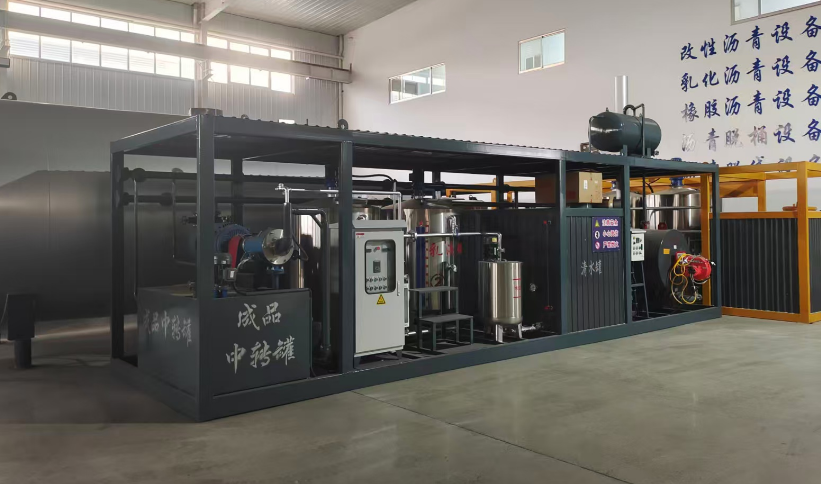
Thirdly, focus on the core production process. The colloid mill is the heart of modified bitumen equipment, determining the modification effect. Advanced shearing and grinding processes can reduce the particle size of the modifier to less than 5 microns, ensuring uniform dispersion in the bitumen. When purchasing, it’s essential to ask: What is the grinding fineness? Does the processing capacity match your output goals?
Fourthly, consider the level of automation. Depending on your usage habits and production needs, you can choose from fully automatic (PLC-controlled), semi-automatic, or manual types. Fully automatic equipment handles batching, mixing, and grinding processes automatically, offering high precision in proportions and making it ideal for large-scale standardized production. Semi-automatic and manual equipment provide greater flexibility, making them suitable for small-batch production or frequent formula changes.
The application scenarios for modified bitumen equipment are vast. Some pavements require materials with higher strength, better durability, and special properties:
Highways and national/provincial trunk roads demand high-temperature rutting resistance, fatigue resistance, durability, and environmental sustainability with resource recycling.
Special bridge and tunnel pavements require high elasticity, high adhesion, strong deformation resistance, excellent bonding with steel plates, low smoke, and environmental friendliness.
Airport runways need extremely high load-bearing capacity, impact resistance, and resistance to high-temperature airflow.
Municipal roads and maintenance projects prioritize quick traffic opening, low noise, thin-layer paving, and energy efficiency with environmental protection.
The application of modified bitumen highlights its unique advantages in practice. For example, on the G30 Lianyungang–Khorgas Expressway in China, the Hami–Turpan section used SBS-modified bitumen concrete for the middle layer, improving rutting resistance and durability. The Cangrong Xunjiang Bridge, the world’s largest single-column three-tower suspension bridge, adopted a combination of high-elasticity modified bitumen and high-viscosity tough modified bitumen for its steel deck pavement. This solution addressed issues such as steel structure deformation under heavy loads and high temperatures, as well as the vulnerability of the pavement layer, thereby extending the bridge’s service life. International airport runways have also applied rubber-modified bitumen as a stress-absorbing layer to enhance load-bearing capacity, impact resistance, and resistance to high-temperature airflow from aircraft engines.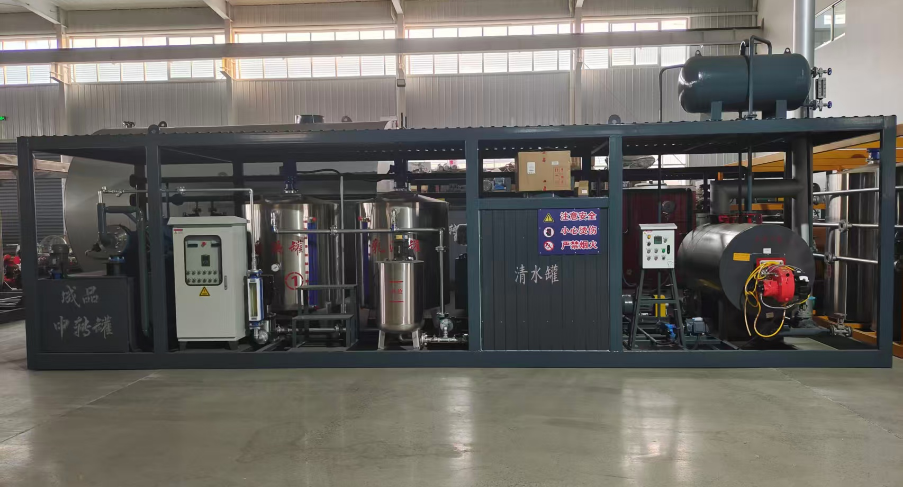
Typically, polymer-modified bitumen equipment has an output range of 10–20 t/h. If you have specific product requirements, please let us know. We can assist you with questions related to selection, usage, and application scenarios.
Pre:160t/h Asphalt Plant After-Sales Service in Kyrgyzstan Next:Why More Customers Choose Mobile Asphalt Plants
Philippines:17F High Street South Corporate Plaza Tower 2, 26thStreet cor. 11th Ave, BGC, Taguig
TEL: +63 908 868 1506
Email: eagloballbuilders@gmail.com
Singapore:60 Paya Lebar Road, #12-03, Paya Lebar Square, Singapore 409051
Thailand: 948/22 Rama 2 Rd, Mahachai Samutsakon 74000
TEL: +0642 85 2984 Mr. Chirapat
Iran: Tehran, Vanak, Sheikh Bahaei square, Sadaf Tower, No.47

TEL:+86-13523776367

FAX:+86-371-55007709