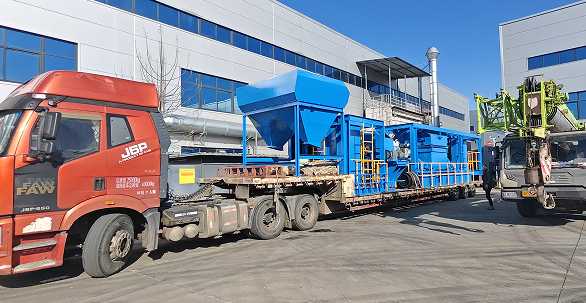
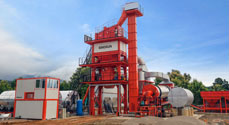
Asphalt mixing plants are our core business. We handle independent design and production to meet our customers' diverse application requirements. Our sales manager immediately contacted the client to understand their specific parameters and developed an equipment solution.
The client evaluated several suppliers in China. Ultimately, our design philosophy gained their recognition, which was just a promising start.
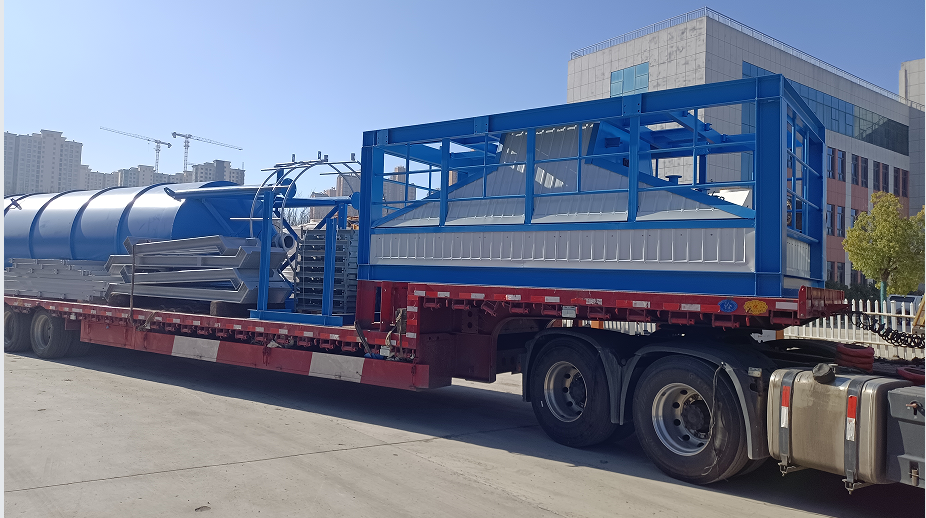
The client visited our factory in China. Among the many manufacturers, they chose to cooperate with us. Our decision was influenced by our 7S production management system, which ensures quality at every stage of the production process, and our use of high-quality materials. Furthermore, our rigorous inspection and testing procedures guarantee the quality of every product shipped. The client's choice was a significant vote of confidence, and we honored that by ensuring high-quality, on-time delivery.
We have now assisted the client in completing the installation of the main plant unit, and the next step is commissioning and trial production.
Where are Asphalt Mixing Plants Used?
The primary applications for asphalt plants are highways and expressways, which represent their core usage area. Other key applications include municipal roads and urban traffic infrastructure, airport runways and apron construction, bridge deck paving and tunnel projects, as well as hydraulic engineering and other specialized fields.
With rapid urban development, the demands on asphalt quality are constantly increasing. Consequently, the stability and precise control capabilities of asphalt plants have become critically important. This is an area we consistently focus on and a key direction for our ongoing research and development.
Classification by Production Capacity:
-
Small Asphalt Plants: Typically refer to equipment with a capacity below 40 tons per hour, producing batches of 500kg or 800kg. They feature a simple structure, low investment cost, and are easy to install and relocate. They are generally used for county and township road upgrades, municipal road maintenance, and small-scale, dispersed projects.
-
Medium Asphalt Plants: Usually have a capacity ranging from 80 to 320 tons per hour. They are commonly used in the construction of secondary and primary roads, urban arterial roads, and medium-scale municipal projects. These are popular models in the market, offering high cost-performance and meeting the needs of most clients.
-
Large Asphalt Plants: Typically have a capacity exceeding 320 tons per hour. They are primarily used for expressway construction and airport runway projects. They feature high output, comprehensive environmental protection systems, and are often equipped with hot recycling systems (RAP) and a high degree of automation.
Client's Chosen Model:
The model selected by our client in Kyrgyzstan is a batch type (intermittent) asphalt mixing plant with a production rate of 160 tons per hour.
This equipment offers precise batching. Each material component can be accurately measured, and the mix formula can be adjusted easily. The process involves first drying and heating the aggregates, which are then screened and stored in hot bins. Subsequently, each batch is precisely weighed and mixed in the mixer according to the specified formula, ensuring consistent and stable quality.
Other Available Options:
We can also provide various other capacities, including: 40t/h, 80t/h, 100t/h, 150t/h, and 200t/h.
Depending on your application scenario, we offer both mobile and stationary types. In addition to batch type plants, we also have drum mix plants and continuous mixing plants available.
Please share your requirements with us, and we can provide you with detailed product information.
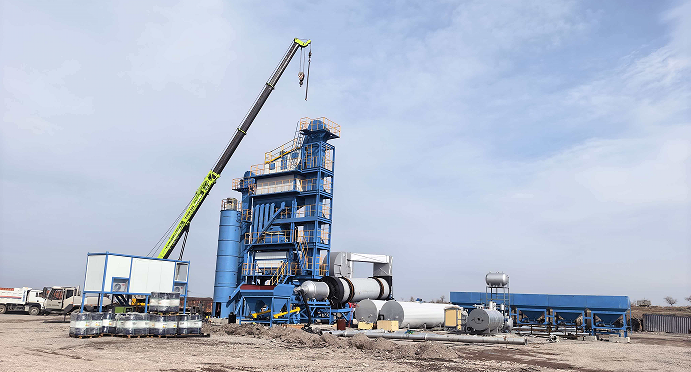 In 2025, we received an inquiry from a client in Kyrgyzstan. The client is involved in the China-Kyrgyzstan-Uzbekistan railway construction project and requires an asphalt mixing plant for road building. They were preparing equipment for this project.